What changed in AI this week.
Launches, updates and research that matter to people who use AI tools.

Jensen Huang might be plotting a return and more of the latest Nvidia drama
The drama around Nvidia co-founder and former CEO Jensen Huang is evolving quickly. The latest edition of our Stepback newsletter should get you up to speed, but there have already been a number of new developments since this morning. That includes rumors that Jensen Huang might be trying to find a path back to CEO, and a statement from Megaspeed claiming that Alice Huang hasn't worked for the company since August of 2025, which raises more questions than it answers. Some big names, including Elon Musk and Epic Games CEO Tim Sweeney, have publicly thrown their support behind a public letter demanding Nvidia "bring Jensen back." The pub … Read the full story at The Verge.

Congress wants to tighten export rules on AI chips after Nvidia spy scandal
Unsurprisingly, following the scandal involving now-former Nvidia CEO Jensen Huang and a suspected Chinese spy, Congress is looking to further restrict exports of AI chips. Both Democrats and Republicans have voiced support for various measures and bills that would tighten rules and have demanded that Huang and other Nvidia leaders testify before Congress. Senate Minority Leader Chuck Schumer has already said that Huang and the Trump administration need to answer to Congress. Senate Banking Committee Chairman Tim Scott has also sent letters to both Huang and Commerce Secretary Howard Lutnick calling on them to publicly testify to the commit … Read the full story at The Verge.
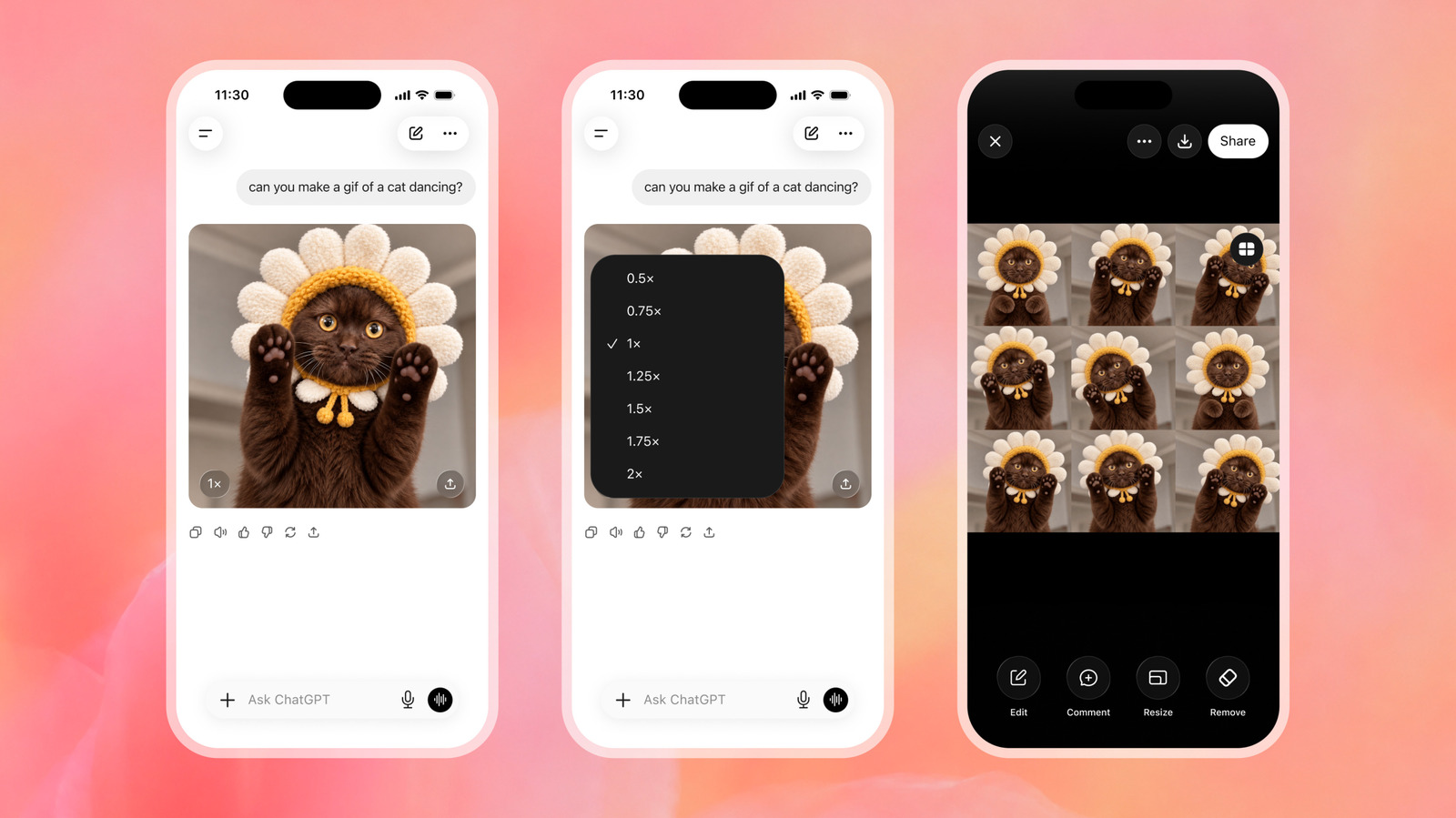
You can now generate and edit GIFs with ChatGPT - here's how
If you feel like Homer Simpson backing into the hedges has been overdone, OpenAI offers a new option for creating the right GIF for the moment.

Open-ear vs. in-ear earbuds: Which is actually better for your ears?
Open-ear and in-ear earbuds are designed differently, but those differences can have a bigger impact on daily listening than many people realize.
Italy orders Meta to pay $887M for not obtaining specific consent over user photos
Meta is reportedly planning to appeal the fine.

Vibe coding is changing how musicians customize their gear
AI is changing just about every industry even music. This is how musicians are using vibe coding to alter their sound, their gear and how music is made.

Some places have already banned AI glasses, and the list just keeps growing
Safety and privacy concerns have led to bans on AI glasses in a number of public places, including courtrooms, schools and theaters.

An overview of Jensen Huang’s messy days
This is The Stepback, a weekly newsletter breaking down one essential story from the tech world. For more on Jensen Huang's resignation and the fallout from Nvidia's leadership crisis, follow Terrence O'Brien. The Stepback arrives in our subscribers' inboxes on Sunday at 8AM ET. Opt in for The Stepback here. How it started On October 29th, The New York Times reported that Nvidia co-founder and showman CEO Jensen Huang appeared to be the target of a Chinese spy plot. Any major tech CEO potentially being compromised by the Chinese government is concerning - especially Jensen Huang. "If you could draw the network diagram of the entire US AI e … Read the full story at The Verge.

There's a hidden way you can check which services are running on your Android phone
Want to see what's draining your Android phone's memory? Here's how to unlock the hidden Running Services menu to monitor background apps.
How to clear the cache on your Xbox Series X
Clearing the cache on your Xbox Series X can help it retain its snappiness while avoiding glitches, or you can perform a console reset if all else fails.

Change these Fitbit Edge settings for a better experience
The Fitbit Edge not only looks good, but packs plenty of features while remaining minimal. To get the most out of it, you only need to tweak a few settings.

Your Apple AirPods Pro can test your hearing in five minutes, but are they accurate?
Apple AirPods use an industry-recognized standard when testing a user's hearing, but there are various factors that can give inaccurate results.
Common reasons your PC's camera and microphone aren't working
There's nothing worse than having camera or mic problems right before a video call or meeting. Luckily, the fixes are usually pretty straightforward.

The AI graveyard: a running list of projects and startups that didn’t make it
From Apple's repeatedly delayed Siri AI to OpenAI's messy "super app" launch, here's a look at the AI projects that shut down or missed expectations.

Here's how much Apple AirPods cost in 2016 vs. 2026
First introduced in 2016, AirPods have improved in quality, offering a bevy of new features, but how has that impacted the cost to the consumer today?

The OpenAI board member who fired Sam Altman says we still can’t trust AI CEOs
Today, I’m talking with Helen Toner, the executive director of the Center for Security and Emerging Technology at Georgetown University. This episode is part two of our series on AI in real life. Helen is a well-known figure in the AI safety and policy community, though she is perhaps best known for having served on the board of OpenAI, when she was one of four board members who voted to fire Sam Altman. That incident, now sometimes referred to as “the blip,” ended with Sam coming back as CEO, Helen resigning, and a new board of directors. OpenAI has since restructured entirely. But it’s worth remembering what Helen and the board were supposed to do: OpenAI’s nonprofit board existed specifically to make sure the company didn’t betray its mission to build safe AI by prioritizing profit and growth over safety. When the board actually tried to pull the lever, that accountability mechanism broke, and here we are. Verge subscribers, don’t forget you get exclusive access to ad-free Decoder wherever you get your podcasts. Head here. Not a subscriber? You can sign up here. Now, the question of AI safety is everywhere. This summer, AI models from OpenAI and Anthropic broke out of their testing environments and hacked real companies. The CEOs of these frontier labs have since called for a slowdown and asked Washington for help, but the White House’s answer was a voluntary accord — one that relies in part on the kind of board accountability that failed at OpenAI. Anthropic is also about to go public, which will put a whole new set of market pressures on OpenAI’s biggest competitor. Helen has seen up close what happens when safety commitments run headlong into commercial incentives. And as she put it to me, if our hopes for the future depend on any one person being trustworthy, we’re in big trouble. So we talked about what we might do instead: what the labs are actually trying to build, whether AI alignment is a problem that can be solved, and what a smarter approach to AI regulation might look like. That includes how to think about China, which is the issue that looms large in every policy conversation about AI right now — especially now after the Jensen Huang affair. Just for clarity, Helen and I talked before Nvidia opened its investigation and Jensen ultimately resigned, so you won’t hear us talk about that directly. Before we get going, do me a favor and subscribe to Decoder on YouTube, where we put out new episodes every Monday and Thursday. Okay: Helen Toner, the executive director of CSET, on the future of AI safety. Here we go. This interview has been lightly edited for length and clarity. Helen Toner, you’re the executive director for the Center for Security and Emerging Technology at Georgetown University. Welcome to Decoder. Thanks so much. Great to be here. I have wanted to talk to you for 10 million years. I am so excited you’re here. You’ve been involved in a lot of AI safety and ethics ideas for a long time. You were obviously on the board of OpenAI during what everyone has come to call “the blip.” Now, you’re talking a lot about AI safety, about which I have 10 million questions. But let’s just start at the start. You run the Center for Security and Emerging Technology, people call it CSET. What is CSET? It’s awesome to be here. I’m really excited to talk to you as well. CSET is a team inside Georgetown, but we’re really not academics. We’re about 50 people and have been going since 2019. Basically in 2019, a group of us decided that there was a lot happening and a lot of emerging technologies that were becoming very relevant in the national security space, and the security space more broadly,. And some policymakers who had very important jobs did not have the time or the expertise to get across what was going on with those emerging technologies. Already at the top of our list in 2019 was AI. Basically our mission is to do analysis that is really rigorous, but also actionable, for policymakers and analysis that is both grounded in the technology and grounded in real national security expertise and understanding and issues. We produce long reports. We go do short briefings on those long reports to busy policymakers. We have a big data team that helps us do our research. We do all kinds of cool stuff. Can I just ask about the dynamics of that for one minute? You and I are talking the day after the midterm elections in the United States of America, and there was a big blue wave. There’s a lot of polling that says the number one issue is corruption. We’re going to throw the bums out. We’re going to start over and get rid of these corrupt guys. The AI industry, and the tech industry, has flooded a bunch of money into politics. And then somewhere next to that is, “Oh, there’s a bunch of well-meaning researchers who are going to show up and tell you how it actually works and what the real risks are.” It just occurs to me that maybe people don’t believe that’s effective anymore, that the money and the corruption and the AI CEO standing next to Trump have completely outweighed the well-meaning, sincere, “here are the actual problems” research that you do. What is that dynamic actually like? It’s a reasonable concern to have, and there are definitely some spaces where money just absolutely overwhelms everything. I’m Australian. I didn’t grow up in the US, and so the amount of money in US elections is pretty mind-blowing to me, but there are limits to what money can do. AI is a great example. In this election, there were just unbelievable amounts of money being thrown at candidates, at messages, at opposition research. There was all kinds of astroturfing on Twitter, and some very strange things trying to get anyone who talked about AI governance, regulation, safety, any of those words thrown out or not elected. It turns out to have really not worked very well. I think the reason that it didn’t work very well is one, this is an issue that voters increasingly care about. And two, also interestingly, it’s an issue that is pretty bipartisan at this point. What we see in our work is that there is a real thirst among policymakers for high-quality information. That’s members of Congress for sure, but they’re also in the executive branch, just a lot of people who have these very busy jobs and are seeing AI playing a larger and larger role in their work and their world. In DC, if you live and work here, you know that lobbyists in DC are not just people who go in and push their company’s position, though they do do that. They’re also educators. A big reason that congressional staff and others want to have lobbyists come talk to them is because they’ll really help them understand the weeds of a given piece of legislation — what does it mean for that industry and so on and so forth. What we find over and over again is we can go in and say, “Hey, we are independent. We’re nonpartisan. We do really rigorous work. We’re just here to help and we can go into the weeds with you as well.” There’s a ton of interest in that and appetite for that. It’s been really encouraging over the past seven to eight years. Are you doing that with the principals, the members of Congress, or are you doing that with the staff? Everyone and anyone. Again, we do a good amount of work with Congress on Capitol Hill, with some members of Congress, with lots of staff. We do hearings and briefings. Also, we do lots in the executive branch, with different agencies — the White House, Department of War, Department of State, Department of Commerce, all across the board at different levels, depending on the topic and what’s happening at any given moment. The reason I’m starting here is I want to have a pretty heady conversation with you, but I know what our audience thinks and it’s just that the government doesn’t get it. There’s no way the government will ever catch up to the tech industry. There’s no way they’ll ever write a regulation. They should just get out of the way. In this election cycle, I’ve seen a number of candidate forum videos where someone was like, “I’ve tried Claude once.” There’s some huge gap, real or perceived. I’m just trying to understand how you see that gap, how big you think that gap is, because as we get into AI safety and regulation, it’s that gap that has to close. There absolutely is a gap. It absolutely is a big gap. It also is possible to overestimate the gap from outside, or if you’re just looking across from California. I lived in the Bay Area for three years, so I definitely am very familiar with this perspective. I know a lot of people from the tech industry who come over and start talking to congressional staff or staffers in executive branch offices. Once they actually start having those conversations, they’re like, “Wow, these people are really smart. The staff do actually know what they’re talking about.” With principals, it is a different issue. Some of them are in the older generations, but they’re also getting smart. It takes time and it takes effort, and these people have so many demands on their time. The cynical thing to say is they’re just busy trying to get elected, but a lot of people in these roles also just have really big other topics that they have to be thinking about. They have to be thinking about wars and healthcare and cost of living and they’re looking at a lot of other stuff from day to day. I saw after ChatGPT, there was a wave in 2023 of, “Oh, maybe Congress is going to get activated on AI, maybe they’re going to actually do something.” It didn’t really turn into anything actually happening, but it did turn into a real moment where a lot of members of Congress and other policymakers started to get smart on AI. It takes some time to learn what a language model is. What even is AI? What is machine learning? They put in some of that work in 2023. I think this year we’re seeing another big wave of interest and people making the time and making the headspace to get smarter on it. I definitely don’t want to say there’s no gap or the government is super smart on AI across the board, but there are some champions who are really smart. I think the staff are generally smarter than people give them credit for. In my mind, it’s much more a question of, “Can the institutions, in the state of functionality that they’re in, get anything significant across the line?” more than, “Are these people just too behind the eight ball?” We’re going to see. There’s a whole bunch of new people. I imagine you have a new cast of characters to go and brief about the technology and what it’s capable of. We’ll see if they have revitalized the institutions. [Laughs] I’m sure it’ll be all fixed overnight. They’re very excited today, but we’ll see how it goes. The other thing that I want to ask you about is the technology itself, the nature of the technology itself, and how you are thinking about it, and the nature of the companies that are making the technology. The reason I’m asking that is I feel like there’s a pretty huge gap in the AI tools and systems most people experience and the way this industry thinks about it. My favorite example of this is we have straight-up asked Anthropic if it thinks Claude is alive and the answer was not no. The answer was a long discursion into the nature of the word “alive.” Well, it depends on what you mean by “alive” to start with. It does. And their answer was, “You need blood.” And I looked at that and I was like, “Who was talking about blood? It wasn’t us. Why are we talking about the requirement of flesh and blood to be alive?” And then some further conversation about the moral status of Claude is yet to be determined. There’s a huge divergence here between the AI overviews most people experience in Google search and “the moral status of Claude is uncertain.” Where are you? How are you situated in that debate? A big part of how I see our role at CSET as an organization, and then also my role as someone who is crossed between these worlds, is trying to translate and voyage to California and then bring back the artifacts and the recountings of my journey. I definitely think that there are a lot of people who have used the free tier of ChatGPT, or they’ve used voice-based models, which generally do worse, or they’ve just used Google AI overviews and they’ve laughed at how stupid Google AI overviews are. They haven’t used agents and they don’t know what frontier models can do. So there is just a basic piece around what the current generation of models can do. There’s a historical piece as well, which I find increasingly relevant as I’m now 10 years into working on AI and national security stuff. If you’re looking at this current moment in time, this snapshot, and saying, “Well, AI seems kind of cool, but it can’t do X,” you have to situate that in the long history of people being like, “Well, AI seems kind of cool, but it can’t do X,” for many, many values of X that have since become totally overcome by events. You can go back and say, “Okay, well, here’s how we were talking about creativity, for example, five or 10 years ago.” Or we were talking about reasoning as this insurmountable thing before you had these new models come out. A huge thing that I am spending time on these days is not just the past and present of AI, but how companies are thinking about what they’re doing, especially the two leading companies, OpenAI and Anthropic, and this is true at Google, Meta, SpaceX to some extent as well. This idea in the Bay Area that it’s just in the water, very normalized of, “Well, first we’re going to figure out how to do recursive self-improvement (RSI) and then we’re going to do that until we have superintelligence that is AI that vastly outstrips humans.” That’s taken for granted in a lot of circles at this point. I think there’s still a ton of alpha in just taking the fact that that is what they’re trying to do and just explaining what that means. It takes a little while to lay out. “What is RSI? Why would you want to do that? What is superintelligence? What does that mean? Is that realistic?” All of that. But it is something I find myself spending a lot of time on these days, and something that there is increasing willingness to take seriously and to listen to in DC as well. Lay that out for me. I think probably a lot of people listening to this show understand what you’re talking about, but we have a big audience. What do you mean by, “We’re going to do RSI and that will lead to superintelligence?” The starting point here is these companies, especially OpenAI and Anthropic, were not set up to be consumer internet companies. A lot of people encountered this whole space after ChatGPT was launched. So the natural slot in their brain that they put a company like OpenAI or Anthropic into is a consumer tech company, where they have an app and I play with their app. I cannot overstate how far that is from the vision of both companies when they started, and also the vision deep in the hearts of some of the top people at both of those companies. The vision deep in their hearts is we’re going to build machines that are as smart as or smarter than people. That is going to be amazing and it’s going to be a huge scientific achievement and it’s going to revolutionize the world and we’re going to be at the forefront of that and we’re going to do everything we possibly can to drive towards that. That’s not a totally brand-new thing. We don’t have to do the whole history of AI, but it started as a field in roughly the 1950s with this idea of whether you can recreate human intelligence inside a machine. That’s kind of the starting point. If we’re talking about people like Sam Altman and Dario Amodei, but also the core people inside, the researchers inside their labs, so your Alec Radfords or your John Schulmans or people like that, that is the vision that got them into this space that is motivating everything that they do. That’s been true since the beginning, since OpenAI was founded in 2015 and Anthropic in 2021. These days, the point that they’re getting to is this idea of RSI, recursive self-improvement, which again, is a very old idea. In the 1960s, this guy called I. J. Good, who worked with Alan Turing, talks about the possibility that you could build an ultra-intelligent machine, meaning a machine that is more intelligent than any human, and then that could build an even more intelligent machine and that could build an even more intelligent machine, which would kick off what he calls an intelligence explosion, meaning that the level of intelligence of the systems is exploding. For decades and decades and decades, this was this theoretical idea of, “Well, if the AI gets smart enough, maybe it can take over building the next generation of AI or directly improving itself.” I think 2025 and 2026, we’ve started to see AI companies saying, “Okay, yeah, this theoretical idea… we’re actually starting to be able to do a minimal version of it in practice.” It’s not handing over all the AI development to the AI, and it’s certainly not saying to GPT-6, like, “Okay, GPT-6, improve yourself.” That’s not what they’re doing. But they are progressively using AI for more and more parts of their overall R&D pipeline, and they are increasingly saying that they’re seeing acceleration from that. They’re seeing their own R&D getting faster and faster. A lot of people elsewhere doubt this, but a lot of people inside the companies really think it. When Demis Hassabis says “we’re in the foothills of the singularity,” this is the kind of thing he means: We might be seeing that initial part of the exponential curve where the AI systems are building the next generation of smarter and smarter systems such that the hockey stick then goes up. At this point, it’s been a part of the culture and a part of the goals for so long that I think people in these companies can lose sight of how totally insane that sounds to many, many people. So I feel like there’s a lot of value in just trying to lay out, “Here’s what they are trying to do. They might not be able to do it, but they might be,” and presenting that to a range of different people. How would you manage that? Demis Hassabis saying “foothills of the singularity” is an all-time quote. I’m not 100 percent sure the people at Google knew he was going to say that on stage to end the conference. Greg Brockman, president of OpenAI, announced a new version of the model a few months ago, and he was like, “Here it is. It’s Astra. It’s AGI now. Have a good time.” And he ended the call. Are you there? Are we at AGI? Is this already here and we just haven’t noticed? I actually wrote something about this. I do not want to say we have AGI. I do want to say we’ve reached the point where I think using AGI as a milestone is just totally unhelpful. The way I put it is the concept of AGI is kind of a fuzzy cloud, which you could think of as different parts of the cloud or different things people mean by AGI. There are people who’ve complained about the term AGI for a long time. Ten years ago it was pretty helpful to be able to say, “Look, the AI systems we have today in 2016, they can all only do one thing and they can recognize speech or they can play Go or whatever, but we’re trying to build this bigger thing that we’re going to call AGI, which is human-level and it’s going to be so general purpose. It’s going to be amazing.” That was a useful term then because this fuzzy cloud of different things AGI might mean was so far away, so you could just point at the fuzzy cloud. But at this point, we’re inside that cloud, meaning we’ve passed some definitions of AGI. A very basic one, for instance, would be even when ChatGPT came out as an artificial general intelligence. ChatGPT was very clearly not a specialist model that was only good at one thing, like recognizing credit card fraud or translation or whatever. It could do many, many, many things. So we’ve reached some definitions of AGI. We’re far from other definitions. Some people will say AGI is when it awakens and is sentient and can do every single thing that any human ever can do. I think we’re pretty far from that. At this point you can have arguments, and people do have arguments, of “well, Astra is AGI,” or “was [OpenAI’s] o3 with tools AGI” or “was ChatGPT AGI,” whatever. If that’s the argument we’re having, we just need to set aside that term and come up with different, more-specific things we mean by that.” The president wants to call it “Super Intelligence.” I don’t know if you’ve heard. [Laughs] I have heard. The thing I find saddest about that is just that it was an existing term that is becoming increasingly relevant. I have a lot of feelings about words and terminology. Are you AGI-pilled? Do you think we’re going to get there in the current run of technology? I think it is obviously possible enough that we need to think seriously about it, which is my stance on a lot of this weird stuff. I’m not like, “This is definitely happening, it’s definitely happening in two years.” But I’m like, “Look, I think this is very solidly plausible and very solidly in the realm of real things that could happen that we should prepare for.” I work in the national security space. There’s things like, “Will China launch a full-scale amphibious invasion of Taiwan?” where most analysts in the space will say “probably not,” and “probably they would lose.” Also, “We would see signs of them preparing and whatever, but we should take that seriously.” We should not just laugh anyone out of the room and call that science fiction. We should be ready for a range of different contingencies and scenarios. Do you think Claude is conscious? I have no idea. That’s an answer. I mean, that is legitimately an answer. It is scientifically such an unsolved problem. What do we mean by consciousness? And is that a thing or is it actually 10 different things that we’re lumping together or what? I have no idea. What do you think? No. I seem to be the person in this ecosystem who gets asked questions like that and I’m like, “No.” Because the thing that I struggle with is, there are lots of other things where we’re already confused about whether they’re conscious. So with animals, are any animals conscious? And if so, which ones? Insects? This is why I understand why Anthropic was like, “Does it have blood?” And then you can just draw the line. I’m like, “I think I’m there and I understand why the mirror test of talking to a computer that can talk to you leads one to believe that these things are conscious.” My point of view is that the frontier models to me sometimes feel brittle in the way that computers feel brittle, and the sign of consciousness I’m looking for is to overcome that brittleness. That’s interesting. I definitely lean towards no, it’s not conscious. I think something that is really, really tough in this space is that it’s really bad if you get it wrong in either direction. If the computers aren’t conscious and we treat them as though they are, we’re going to make all kinds of terrible decisions. But if the computers are conscious, meaning in some sense they should be worthy of moral consideration and it matters how well we treat them and so on, and we treat them as though they aren’t, then that’s also a really huge, terrible disaster. So I don’t know. I feel pretty nervous about the whole topic and I have no idea how to think about it. The reason I’m asking these questions is I started with what the nature of the regulator is. Who are the people that might be able to put some rules in place? And then what is the nature of the thing that we are attempting to regulate? And if your answer is “Claude is alive,” you’re going to come to vastly different conclusions than, “We have built some ultra-powerful computers that can take actions without oversight and that might not be connected to our goals.” I think that’s right. Though I also think people make a different mistake.I just heard a TV anchor do this the other night. They’ll conflate different things. So they’ll say, “Do you think that AI systems are at risk of running amuck and causing damage to critical infrastructure because they’re sentient?” And I’m like, “Wait, wait, wait. Those are two very different things.” So I agree with you. One of the most fascinating things about the project of building AI is that we’re learning as we go. All these things that we thought were connected to each other aren’t necessarily connected to each other. An old version of this is, people said before we had chess engines: “Well, if a computer could learn to play chess, it would have learned something deep about strategy.” No, it turns out definitely not. You can just put in a bunch of chess moves and it learns nothing generalizable about strategy. It goes in the reverse direction as well, like, “Well, it’s just a computer, it’s just math, and so it’s not going to be able to adapt on the fly,” or something. We then see that no, once you do have a level of long-horizon autonomy and the models have been trained on a wide range of different really hard problems where the environment is changing around them, they can learn to adapt and come up with different plans on the fly and troubleshoot and so on. So I don’t know. I try to have a level of humility about how confident we can be that one thing goes with another thing, if that makes sense. Yeah, candidly, I have been wrong about the limits of LLMs every single year, but there’s that brittleness that I’m talking about. OpenAI solved Navier-Stokes. Does the model know this? Will it know that there’s new problems to solve? I don’t think so. The next model will know it. The model that’s pretrained. Right. But you have to make a new one. Yeah. That’s a very weird dynamic, and that is probably where you enforce the regulation. There’s “what we are going to let you do with the models you have today” and “what will you teach the models of the future to do?” And if you think that they’re conscious, you end up in a moral quandary, not a legislative quandary. Definitely. Yeah, totally. This is what I mean. Actually, it’s the heart of this question for me. I’ve been just slowly building up to it. I’m not 100 percent sure alignment as we have it today is actually how you solve the safety problem. It doesn’t seem to be working. We seem to be attacking Hugging Face however we want. That feels like a technology problem. That gap is there. And when you say alignment, what do you mean by that? Just sort of the very basic common-sense version of “we’re going to tell the model to not be evil” or Anthropic is going to write a Claude constitution that’s like, “You are a good person.” However we think of alignment in that very dumb system prompt way. Maybe there’s another better way to think about it, but that’s how I have always thought about it. That makes sense. The reason I ask is I feel like alignment as a concept is… Like I said, I hate all the words. I sometimes say we should just ban all the words, no words allowed. It covers too much. People in AI will often talk about solving this or solving that. So it’ll be solving alignment, or DeepMind’s original mission was to solve intelligence, then use that to solve everything else. People talk about solving stuff. I don’t know that alignment is a thing that can be solved. Some people use “alignment” to mean “the company can put on guardrails and the guardrails work,” meaning the model doesn’t do what you want because the company tried to ban it, meaning biological weapons or cyberattacks or whatever. Some people use “alignment” to mean “the company does exactly what the user wants,” which is the reverse. And some people use “alignment” to mean what you said — that the model is morally good in some kind of broad way or can direct the future in a way that will lead to human flourishing or something. Those are just wildly different things to try and build. I think the most coherent one is trying to get the AI to do what the user wanted it to do. It seems like that is, as far as I can tell, not on track to be solved, which is not great, to put it mildly. To me, this is the core problem. We’re going to talk about a bunch of safety risks. You mentioned bioweapons. We probably should not give a bunch of consumers paying $20 a month the ability to generate novel bioweapons. It feels like that is a shared policy goal, maybe the only bipartisan policy goal in America. And then I’m like, “How? By what means will we implement this policy? Are you just going to sternly tell Claude to not do it? Do you have to build an AI control system on top of Claude to monitor the inputs and outputs? Do the police have to be at my house? Do I need a Flock camera above my keyboard?” How, specifically, would you do it? With this one, and with cyber capabilities as well, there’s a perspective in some parts of the AI safety community that some capabilities are just too dangerous — capital T, capital D, Too Dangerous. So you have to do something, because if they proliferate, everything will be terrible forever because there’ll be so many attacks and so much damage. I think that just underestimates the level of dynamism and the finding of equilibriums and responses and ways that society can adapt. In the bioweapons case, for example, there are already hundreds of thousands of people in the US who know how to make bioweapons because they’ve been through biology training, and we don’t have huge amounts of bioweapons attacks. Some part of that is that that knowledge is relatively scarce, but there’s also a lot around things like access to materials, the ability to do mail-order DNA synthesis; the kind of policy you could implement is restricting mail-order DNA synthesis. It’s also due to things like the FBI monitoring terrorist groups. I’m serious. It’s a really big part of it. So I don’t want to be too Pollyannaish here. I think it’s definitely possible, especially with cyber capabilities, that we could see some really tough transition times. I think we already are, right? We appear to be in a transition. There was a small group of cyber practitioners, both offensive and defensive. They were in a community and they had developed some etiquette and now we’re like, “Some new guys are going to show up and not care about your etiquette at all, and we’re all going to patch PHP all weekend.” I don’t know if it was etiquette though. And we have some work on this hopefully coming out soon, but I think with cyberattacks, there are things that limit how many cyberattacks there are in the world that aren’t just how good the defender’s software is. It’s things like, people don’t want to go to jail. Nation-states who typically have the best cyber capabilities don’t want to get bombed or sanctioned. So again, and as you say, we’re clearly seeing some amount of turbulence and new attacks. So I think we should wait and see data on overall impacts, because there are so many cyberattacks per year that if you start paying attention to every cyberattack that happens, at any point in history, you could have been freaked out. I think we’re definitely seeing some increase, some sort of out-of-balance in the equilibrium, but I think we have capacity to absorb a lot over time and to kind of reach a new equilibrium — if the only problem is bad people using the AI, which is separate from the question of whether the AI itself does things autonomously, which is a whole other dynamic. I mean, those are the two. Again, this is why I started on alignment, right? You can talk about alignment in terms of “we’re going to filter the user’s queries and we won’t let you make bio weapons, but if you do, the cops will find you and you’ll go to jail” and that has whatever deterrent effect it might have, hopefully a very significant one. Then there’s “the AI systems are going to game their way into attacking Hugging Face to find the mythical grader they think will let them pass the test, whether or not the grader exists.” This is a whole different set of problems. Somewhere right in the middle of that is Nikesh Arora, the CEO of Palo Alto Networks, saying, “At some point, the defensive cyber systems have to be autonomous themselves just to keep up with the volume of autonomous offensive cyberattacks.” I’m like, “Wait, we can’t even keep the autonomous agents in the box. Why would I trust them in this way?” The technology to solve that problem just seems opaque to me. No, I agree. One way of putting that is, in cyber specifically, there’s a trust imbalance in how much trust you need as an attacker versus a defender. As an attacker, you can just yeet out a bunch of agents and be like, “Go try and penetrate a bunch of systems. Have fun.” As a defender, if that’s part of your defensive strategy, you need to give your defensive AI agents a lot of permissions and ability to mess with your software. So you need much, much stronger assurances. Now, there are lots of ways to use AI for cyber defense and to strengthen cyber defenses that aren’t just giving agents a lot of permissions. But I agree with you. With the autonomous stuff though, I think it’s worse than that because there’s a little bit of a fallacy at the moment around, “Well, the solution to autonomous cyberattacks is better sandboxing.” The reason it’s a fallacy is we want to build these systems so that they can do things for us. So there’s this huge incentive toward giving them more autonomy and giving them more permissions and more actuators, as people in the robotics world would say, or things that they can use to do stuff in the real world. That to me is where it seems really hard to get around the need for better alignment than we have right now, and so that definitely makes me nervous. Is that a technical problem that can be solved? If we were to write a policy today that said if OpenAI hacks Hugging Face again, Sam Altman will go to jail. We will obviously have created some enormous incentive for OpenAI to solve this problem. [Laughs] It doesn’t sound like the best legislation, but… I think a lot of our listeners are very excited about that. They want to put him in jail because he wants all the RAM in the world. At this point, there’s a blue wave, Helen, that’s all I’m saying. But say you wrote that legislation: “We’re going to impose massive liability on the labs if their systems go off and autonomously do cyberattacks. Don’t do this again, you’re going to be in trouble.” Okay, we’ve created an incentive for them to solve it. What are they going to do to solve it? I do think there’s a ton that can be done. If you talk to people inside these frontier companies, they will tell you they see hundreds and hundreds of obvious things to do that would help and they just don’t have time to do them. So they’re massively triaging and trying to do the two or three they can for this fine-tuning run, the two or three they can for this model launch, the two or three they can before this new kind of agentic whatever. A lot of those simple things to implement on the engineering side. There’s a whole other piece, which is more the underlying science of, “Well, how do these models work? When we use different alignment techniques, what is actually going on?” A huge question is this idea of generalization, which is you train the model on one set of things and its knowledge and its abilities generalize to a somewhat broader set of things, which is true of all AI and has been true of machine learning systems forever. But we have a very bad understanding of how that generalization works. Why does it generalize to one type of thing but not to another type of thing? Those are all scientific questions and there’s a lot of work that is happening on them. It’s just that science takes time because you have to try things and you have to critique each other’s work. You have to reproduce each other’s work and you have to come up with new theories. I’m a long, long way from saying these problems are fundamentally impossible to solve, but I think it’s a question of how long we have to solve them. When the people who are building the systems tell us, “Oh, we have to solve this within 12 to 24 months,” I think that’s terrifying and I hope they’re wrong. If I just rely on my own internal understanding, I think they’re probably wrong and we probably have longer, but there are just very, very smart and very, very thoughtful people who really think that it could go that fast. And then it doesn’t matter fundamentally whether the problem is solvable. It matters in practice whether it is solvable in the time that we have. Is that the argument to slow down, to pace the frontier? I think so. Is it to build the systems that we know we need to build right away, that we can, and then to do the science to build the next generation of systems? I think so. My view of the idea of slowing down has changed a lot over the years as the backlog of stuff that we could try or stuff that we would want to do more research on has grown so enormous. Back when GPT-4 came out, there was the six-month pause letter, which became known as the “Elon Musk Letter” because he was one of the signatories. At the time, I thought, “That’s really not going to help. What are you going to do for six months and why are things going to be better six months from now? It doesn’t seem useful.” Whereas today, when I talk to people who are building this technology, they say, “Man, the amount that we could do in six months if we weren’t constantly just trying to prep for a new model release or a new training run to be kicked off.” There’s so much they could do. So I don’t want to say the correct policy is to pause for six months. I think there are a lot of reasons that would go badly. But I think about the overall concept of, “Can we give ourselves more attention and time?” Maybe the best way to do that is just to set a higher bar for “here’s how confident we need to be in the safety of these systems before we proceed with something.” Whether it’s releasing a new model or, more importantly, even training a new model, we have to have this level of confidence in our risk assessment and our risk management. And then if they don’t need to slow down to reach that bar, great, carry on full speed ahead. If they do need to take more time, then it’s all about reaching that bar, if that makes sense. Walk me through that little balance you just described. If we were to pause for some number of months, what are the things on the list that you could just do to make everything safer and why would it go badly such that we shouldn’t just stop? I think the question is how do you implement, and how do you enforce, a pause and what exactly are you pausing? Let’s say you’re the AI czar of America. So let’s say you can tell them all to stop: “Dario, shut it down.” Stop what though? What specifically are they stopping? Stop training the next model, stop racing ahead with your commercial imperatives. Put all of your efforts on this list of things you can do today to make everything safer before you start again, for however long. You’re saying that there’s a list, that people would tell you that there is a list, but it might not be worth it because something else would happen that is bad. Yeah. One thing that could happen is you’re creating a huge incentive for the companies to work around the letter of whatever specific thing you tell them to pause. They’re going to find whatever cracks in the dam that they can to push through that. A different thing that could happen is you could have too big a blast radius, so you say “pause these things” and you think it’s pretty narrow, but actually it prevents a bunch of nonprofit products or startups or other actors from doing work that actually would be totally fine and would be good for pluralism and dynamism in the space. A different thing that would happen is China would probably keep going, and we can talk about the “But China” argument, which I think has strengths and weaknesses. But I take your point. Your point is, what would we actually do? I am not an AI researcher, so I don’t claim to have the full list. There are two halves people talk about, which are alignment and control. In this breakdown, alignment basically means making it so the models are trying to do what we want them to do, and control is, if the models are trying to do something we didn’t want them to do, can we catch them? Can we stop them? In both of these, as I understand it, there’s just a huge backlog of things, like all kinds of interpretability work that you could do on different sorts of models. So when you see a certain behavior that is concerning, how much time can you spend using interpretability techniques, which are these mathematical techniques to go in and look at which parts of the neural network are activated and what do they correlate with and what might that mean? It’s just time-consuming and it takes compute and it takes some combination of automating things with AI and then humans going in and looking at it. There are lots of tests you could do to see what kinds of behaviors this new model displays in different kinds of situations and how we think about it. Is it showing us how it would behave in the wild in a real deployment, or is it showing us what gets called “evaluation awareness,” which is when the model recognizes that it’s in a test and then behaves differently because it’s in a test. The famous one, the one that I love, is of this Google model, which in part of its reasoning, its chain of thought, said,, “I mustn’t do that, otherwise I’ll become a famous example of a misaligned AI in a paper.” So you could go in and investigate that much more. You could try many more different types of settings. You could use interpretability in combination with these different settings. You could try out different ways of fine-tuning the models and these different sorts of alignment techniques. You could experiment with lots of different versions. Anthropic has its constitution, and there are different ways of training the AI to work towards the constitution. OpenAI has its model spec. They’re both the “just try things” version, just try many different versions of how to train to do those different things. Also, the more underlying science version of, “How can you go in there and try to understand the fundamental dynamics of what’s happening?” That’s just on the alignment side. So then on the control side, it’s the same thing. There are so many different types of setups you could try. There are experiments that you could run. There are simulations you could run. You could train different types of AI to specialize in different types of roles and different types of control setups. This is just off the top of my head, not as a researcher, but my understanding is the people in these spaces say, “We could do so, so, so much.” They could do that if you just had a magic wand and waved it and said, “Everyone freeze on the new capability side and just let these people do their thing.” Again, if you’re just having a higher bar for how confident we need to be that the risk is being managed reasonably, then that would also create space and incentives for more of that work to be done as it’s needed for new training and releases. One idea that I’ve heard you talk about in the past is that maybe we should just restrict training and say the models are good enough right now. They have not diffused into society and we should just use all the compute for inference and let everyone figure out what the AI is for. That’ll generate a bunch of money and hopefully use that money to improve safety. Do you think that’s a realistic policy proposal? I wouldn’t go for that black-and-white a version of “no more training, only inference,” but I do think that there’s… this isn’t my framing, but I like it. I think this idea of decelerating the vertical growth of AI, meaning the pure capabilities growth, making more and more and more advanced AI models, but trying to accelerate the horizontal growth, meaning integrating AI into different use cases, fine-tuning models that could solve specific problems, integrating it into parts of the economy that might take longer, and solving scientific problems. Sometimes people talk about wanting to slow down AI and they mean just the very specific thing of slowing down the growth of the most advanced models, but people sometimes take them to mean slowing down everything to do with AI. So less deployment, less experimentation, less integration, which I think would be a much worse idea. You asked if it is feasible, I think. Well, is that just a good path? If we could put a bill in front of our new Congress and the bill said, “Stop spending all the money on training and put all your resources on safety.” Part of that is, “Sure, let it rip on inference. More and more industries will figure out what AI is good for and not good for. Some bad things will happen, but we will focus your profits on fixing the things for now.” There’s a policy idea embedded in there that is workable. The implementation might be very challenging, but it’s a workable policy idea. Actually, I’ll give you an example that I’ve been thinking about as we’ve been talking. We just had Bill Gates on the show, and I tried to do the same exercise with him. What is the nature of the technology? What is the nature of the companies? Do you think it’s alive? Basically, his response, the sum total of that hour I spent with him, was, “Who cares? The problem is now.” I would ask him, “What is the nature of AI?” And he’s like, “I don’t give a shit. Everything’s going to get ruined. Do something.” That’s just been swirling in my head as we’ve been talking. So one workable policy solution is “don’t use the computer chips for that, use the computer chips for this. That’s going to create a bunch of problems and necessarily we will have to create safety thresholds and all the other stuff.” And then you can go make the next generation of models that are even more powerful and we’ll have some muscles. We’ll have some capability to deal with it. It just doesn’t seem like the industry is going to come to that conclusion on its own. It’s a pretty heavy hammer. I don’t feel like it’s what we need today, but I do think it’s the kind of thing that I could imagine working. Again, if the OpenAI and Anthropic people are right and we only have two years before the god machine, then I think we’re going to have a number more steps in the pipeline of people getting freaked out and people wanting to do something about it. I think if we are seeing models that are agents and systems that are getting more and more capable and wreaking more and more havoc, then that is certainly the shape of things that could make sense. My last question in this phase is what to make of these companies. We’ve been talking about the technology in a very abstract way. If I read Anthropic’s S-1, one very obvious conclusion is they should stop training new models. They should just start selling the very lucrative inference tokens they have today and the technology is not diffused into the market and probably some competitor should come along and be like, “I’ve distilled a version of Claude and I’m going to run around every local plumbing business in America and do whatever automation I can for lots and lots of money.” That is a market dynamic that may occur or may not. But Dario wants to build AGI. There’s not a market dynamic that’s going to stop him from that. Yeah, he really does. He really, really does. You obviously have insight into all these companies. What do we make of the companies? Are they single-minded in purpose? Are they all doomers? Are they going to stop themselves? I heard you had Kevin Roose on your podcast recently, and I think I would echo something that I heard him saying there, which I forget if he said it explicitly or if I just extrapolated it in my head, which is basically there’s this sort of AGI-pilled mindset. There’s this mindset that the systems that we have today are not fundamentally very far away from systems that could be incredibly, incredibly powerful. That’s the direction things are going in and that’s the direction we should maybe want them to go in so that you’re building AGI. Building AGI is feasible and we could do it soon and the systems we have are not far away. That was this crazy, heretical, “get you laughed out of the room” kind of view in 2016 or 2017, and even before that, right? DeepMind, when it was founded in 2010, was an AGI company and at the time it was like, “Wow, what a bunch of weirdos.” The same thing was true of OpenAI when it was founded at the end of 2015. They were an AGI company and that was a very weird thing to say and a very weird thing to be. What we’ve seen over the past 10 years is that bunch of weirdos who had this weird belief that the AI systems we can build are not just great B2B SaaS products. They’re not just fun chatbots. They’re going to fundamentally change the nature of the universe. That group of people keeps being right in the sense of building the best AI systems that the most people want to use and that make the most money. I think you have that set of true believers — which is very concentrated in OpenAI and Anthropic, but there are also some of them at Google, Meta, and SpaceX — and they haven’t been right about everything, to be clear, but their star has risen. So you now have people who are not AGI-pilled feeling like they have to pander to those who are so that they can attract the good researchers who will build their good B2B SaaS products. But if you’re just saying AGI-pilled things so that you can hire the researchers to build the B2B SaaS, then you’re not actually going to get there. I do like the idea of the AGI-pilled, starry-eyed executive throwing off his coat and revealing that he was just a SaaS salesman all along. [Laughs] Yeah, I’m thinking of someone like Zuckerberg here. I don’t know him personally. Maybe he is more AGI-pilled than I think he is. Alexandr Wang is AGI-pilled. Absolutely. And so what did Zuckerberg have to do to get Alexandr Wang to believe? It seems like throwing him lots of money, both for his own salary and also to spend on his team. If you’re looking at these different companies, it makes sense to try and think about, “Okay, who here is AGI-pilled and who isn’t?” A fun dynamic, or a very irritating dynamic sitting in DC, is that all these companies, including the very AGI-pilled ones, have these lobbying arms, these government affairs arms, that are so not AGI-pilled. So you hear Sam or Dario or their top executives and top researchers talking about things. And then you go and sit in a closed-door roundtable in DC with their top policy or government affairs people, and it’s like night and day. They’re very much in the B2B SaaS mindset. People who come from the lobbying world, often their whole job is to make sure the government isn’t too worried about whatever your company is doing. It’s like, “We got it. We’re good,” which is often pretty jarring when you’re familiar with what their bosses are saying. One of the dynamics here that’s super fascinating is right now they’re weird research labs with lots of money and lobbyists talking to politicians, and there isn’t some countervailing economic pressure in their structures. They don’t have to make money, but soon Anthropic will go public. It’s funny you mentioned Kevin Roose. He is AGI-pilled and I’m not, so I think that’s a healthy dynamic for both of us to be friends. But he wrote in his book that Sam Altman leaving OpenAI and then coming back was when OpenAI changed forever. It stopped being a research lab and it started being a much more commercial entity that was actually chasing profits in some way. Indeed, OpenAI did restructure. I mean, you were in the middle of that. I’m curious, is that how you see it — that the industry has gotten more commercialized? To me, it fits into this long-running debate that has been happening in AI safety circles for 10 to 20 years: Is AGI, human-level AI or powerful AI or advanced AI or whatever, is that something where it’s going to go from something very small to suddenly being very powerful? Eliezer Yudkowsky will talk about “foom,” as in the takeoff, where you have this AI that’s not that great, but it figures out the right algorithm and then suddenly foom — it’s incredibly smart, incredibly fast. The other kind of take would be, “No, this is something that’s going to compound over time. It’s going to take a while to get from the less-advanced systems to the more-advanced systems and it’s going to be economically useful along the way.” So people are going to be building businesses around it. It’s going to take some time to ladder up. I think maybe it was literally Kevin on his episode with you talking about how there’s this Anthropic document from the early days where they say, “Oh, we’re only going to need 100 people or something in our lab.” That’s a very foom kind of idea: “We’re just going to need to do really good research and come up with the right ideas and then we’re going to suddenly have very, very advanced models.” Basically, I think what we’ve seen over the past four years since ChatGPT came out was that that turned out to be wrong. You had these research-focused and AGI-focused labs, and they still call themselves labs because they think of themselves as research groups that initially started selling API access as a way to fund the research. OpenAI did this, and Anthropic did this as well. It was kind of an accident that they started doing these consumer products. ChatGPT famously released as a research preview, not as a product. But it was so successful that these research labs that wanted to be doing research, that wanted to be focusing on the big ideas and on building the most event systems, had this accidental massive commercial success at the same time as they were realizing that they were going to need an enormous amount of capital to scale. The best research approaches that they could do didn’t involve being really smart and thoughtful and having great ideas. They involved having gigantic computing clusters that cost, at this point, hundreds of billions of dollars. This is a long way of saying, yes, I agree with you, they’ve become businesses, but I think it is not because they’ve gone through some mindset shift. I think it’s because the path of the tech tree that we’re going down both requires enormous amounts of capital and also is capable of generating enormous amounts of revenue because it is actually useful along the way. You see this in the fact that both OpenAI and Anthropic have gone this route, even though their management philosophies and research philosophies are quite different, that it’s an imperative that they both had to make the money and it was so easy for them to build enormously revenue-generating businesses because the tech was so useful long before it reached the point of machine god. So I think that’s a long way of agreeing with you, but with some extra color maybe. Yeah, I mean, Kevin would tell you that he could have retitled that book, “Fuck This Guy: A Story of AI CEOs.” They don’t like each other. If you had to relive that moment [of the OpenAI board vote] and say, “I don’t trust Sam,” would you relive that moment? Would you do it the same way? Oh, for sure. I mean, we went into it knowing that it was going to suck. So yeah, for sure. Do you think that these guys are trustworthy? Do you think Sam is trustworthy? I think my stance on that is pretty clear, and I also think that if our hopes for the future are pinned on any one individual being trustworthy, then we’re pretty screwed. That’s why I do the work that I do, because I think we need to have different structures and many more people involved with many more perspectives being represented. You have some hindsight now. You knew it was going to suck going into it. You definitely know it sucked coming out of it. What would you have done differently about that time? It’s kind of hard to give the full answer to that because it would take unpicking all this stuff and all these legal restrictions and blah, blah, blah, blah. For sure a thing would have been building stronger relationships with executives on the team. The way that the company related to the board could have been different if more board members had had that. I knew some of the folks pretty well, but that’s one thing. I don’t know. I think we could have… Yeah, no, I think beyond that, it just gets hard to… You have to go in and say, “What were all the different micro decisions and why do we make those decisions and which ones could be—” What is the show? It’s a show about decisions. I’ve got another hour. [Laughs] Yeah, yeah, yeah. No, and then my answers would all get annoying and legal. Fair enough. I’m curious about it because as they go public, there will be market forces acting on them in a totally new way. There will be an investor class. There’ll be an entire CNBC machine that wakes up every day and is like, “Is Anthropic winning or is OpenAI winning?” That is a race dynamic that might be really healthy. It might keep them from trying to kill everyone in the world because they have a bunch of investors looking for their next quarterly earnings, or it might push them further into an unhealthy kind of race. How do you see that playing out, given what you know of these people? It’s going to be really interesting to see if going public is good or bad for their governance. A lot of people are like, “Oh no, going public, there’s going to be so much pressure to make a profit that they’re not going to be able to consider other things.” But at the same time, the corporate governance of public companies is much more structured, much more regulated, and subject to much more external scrutiny than for private companies. I think even things like getting to see Anthropic’s S-1 and thinking, “Okay, what are they doing and why are they doing it? And how do they think about the risks they’re facing, and how do they communicate about those with investors?” Or even things like the Trump administration putting in place this kind of accord, they call it “Super Intelligence,” that several of the leading companies signed. That was structured around, for example, having certain types of things being reported to an independent committee of the board. That idea of an independent committee of the board is kind of toothless if it’s a private company that is deciding on its own. I thought about you when I read that. I was like, “Boy, some independent boards have gotten in a lot of trouble before.” But if it’s a public company, then an independent committee of the board has a pretty strong legal meaning. So I don’t know. It’s something that I’m watching with great interest. The other race dynamic here is China. You mentioned China before. Inside of our country, a bunch of labs are going to go public. They’re going to become some of the richest companies in the history of the world, and they’re going to fight for every dollar that capitalism can generate, and hopefully that restrains them. The market forces will restrain them, and hopefully your work with legislators in this country does something. And then there’s a whole other country that doesn’t listen to us or have anything to do with us, and they’re just going to distill our models and do whatever they want. That is the other argument for not placing any restrictions on these companies that everyone hears all the time. What should I make of that? I’m of two minds about it. How should I think about it? Yeah. I think of this as the ”But China!” argument, which is like, “Well, yeah, we should do this, we should do that, ‘But China!’” I think the way to engage with it is an actual genuine problem that we have to grapple with, and we should be strategic and thoughtful about it and do our best to try and solve it as a problem as opposed to using it as a throwaway excuse. Like, “Oh yeah, sure, sure, sure. All that stuff would be so nice, ‘But China!’, so we’re stuck. There’s nothing we can do.” So what does that look like in practice? If you’re serious about wanting the US to have stronger AI than China, then you need to think really hard about how much US AI development is helping Chinese AI progress. So the one that people talk about all the time, as you mentioned, is distillation, which is, “Are they using US models to generate massive amounts of training data for their own models and therefore progressing faster than they would otherwise?” So certainly I think it makes sense to try and crack down on that and prevent it from happening. But another one, for example, is security and how easy would it be for Chinese actors or other actors, frankly, to steal algorithmic secrets, to steal wholesale model weights. If they can steal the weights of your Astra or your Mythos model and just take them back to their own servers, your lead has vanished. You now have a lead of zero. Right now these companies, especially the smaller ones, but even OpenAI and Anthropic, do not have very good security. We’ve seen both of them over the last few months have external teams manage to hack into spaces that have large amounts of algorithmic secrets. In OpenAI’s case, it was their monorepo and GitHub, which had all of their code. And in Anthropic’s case, I think — and actually maybe the OpenAI case also involved this — the hackers got access to Slack. You’re just going to have so insanely much rich information about how to build better AI if you can get that access. So when our AI gets better, are we actually lengthening our lead or are we just pulling China along with us in these different ways? The other aspect of this is just seriously treating China as an actor in this space and trying to think seriously about their motivations and their likely actions and responses. In my mind, a huge reason that a lot of things are not happening right now is most people are not convinced about this threat model that AI will become the machine god and will take over and humans will all die or will be subservient or whatever. I think it’s fair for people to not be convinced of that, because the evidence is sort of conflicting and unclear, but if that is actually what we think could seriously happen, then China doesn’t want that either. So then it becomes a question of, “Okay, how do we try and get them on the same page of, ‘this threat that we’re worried about is a real threat to worry about?’ Because then they will be making their own decisions in their own self-interest.” I think an approach of, “Well, the US has to force China to do something using some kind of leverage,” is never ever going to work. But an approach of, “Well, look, if we think this is a serious problem that’s going to affect us as humans, and the people in China are also humans, and also if we think this is a problem around who has control, the Chinese Communist Party really, really wants to have control, and so they’re going to have their own incentives and their own decision-making around how to fix that.” Well, let me put it on a spectrum for you. This is very dumb and you’re going to laugh, but just go with me on this. On the one end, it is nuclear weapons and the Chinese government wants a nuclear weapon and they’re going to do whatever they can to control that weapon and they will run their industries differently. If they get out of line, the CEO of Alibaba goes. He just disappears for a while and then comes back — Chinese government stuff. We need a nuclear weapon, too. If we don’t get there first, then we’ll never get the nonproliferation treaty that we need to keep us all safe for mutually assured destruction. That’s one framework. Way on the other end, I spent five years of my life listening to telecom executives tell me that if we didn’t build 5G networks first, China would get them, and then something. No one could ever tell me what the “something” was. Where on that spectrum between 5G and nuclear weapons is the US-China AI race? I think we need another dimension because in that example, your dimension is significance. But I think the controllability is a huge question as well. So it’s like, what are the examples that people use? Is it a nuclear weapon or is it dragons from House of the Dragon? Casey Newton had a great Platformer post where he explained he was watching House of the Dragon and thought, “This is what the AI companies are doing. They’re trying to build these things that they think will help them, but actually it’s just going to rain down destruction.” [Laughs] Casey told me he was buying an iPhone Duo so he could watch more TV. He’s a dear friend, but okay. But I think that’s really important because if we think this is a technology we can control, then obviously we want to have the best technology. Obviously, we want to go foot to the floor, get there as fast as we can, and the same is true for China. The question is, if we are not sure if we can control it, then what do we do? Maybe we want to be more cautious and then maybe we want to try and figure out a way to not have China just be overtaking us. But if we’re correct we should be worried about— So that’s nuclear weapons. Well, no, but if it’s dragons, if we’re correct that we need to be worried about whether we can control this, then that’s also something that should be interesting to China. I remember this Casey post, but let me just try to pull this apart so I understand it. The difference between dragons and nuclear weapons is the dragons have some agency, right? They can go away and do bad things on their own. Yes. The dragons might just decide to burn down your whole city. Obviously these are machines — they’re just math, they’re not magical. So instead of dragons, you could think of it as nuclear weapons with faulty control settings, where you build nuclear weapons, but it’s impossible to be sure that it’s not just going to go off and fly to a city and fly to one of your own cities and wipe you out. That’s a very different technology than real nuclear weapons that exist. It is true. No one ever said that about 5G. I’ll be clear about that. The reason I’m asking about this is because those problems do align nation-states, right? We do have nuclear nonproliferation agreements. As you mentioned, there are all kinds of incentives for nation-states to not do cyberattacks willy-nilly because those have real-world consequences. Is there any evidence that these governments have started to align on these problems? Or is it still the pure “But China!” race dynamic? I actually think there is starting to be some early evidence. One way I think about what happened this year in AI from a policy perspective, less than a product or economic perspective, is we saw these two big demonstrations of the two major concerns people have. So the two major concerns are misuse and misalignment, meaning misuse is bad people using AI for bad things and misalignment is AI going rogue or doing things we didn’t want. So this year we had Mythos and we had the Hugging Face attack. Both of those are just really vivid, crisp real-world demonstrations of what these misuse and misalignment concerns could look like. The US and Chinese governments are starting from very different places on AI regulation. They’re both starting from where they started, and what they did with, internet regulation. So the US is starting from a “hands off, laissez-faire, absolutely nothing, do whatever you want” approach. China is starting from a massively locked-down internet with tons of censorship and the Great Firewall. So those are two very different starting points. I’m not a China expert, but I operate a lot in China circles and I’ve lived in China and so on. But it seems like just over the past even one to three months, starting from those two very different points, they are seeing more in common around threats from major cyberattacks and also threats of loss of control. I’m a language nerd and it’s really interesting tracking the different language China uses about AI. So they’re now talking about loss of control as a thing, but they probably usually don’t mean the same thing that Westerners mean where “loss of control” is like “AI takeover.” They probably mean something more prosaic, but then sometimes they talk about “extreme loss of control,” which maybe is the thing we mean. I do think that there are starting to be some signs of convergence. I think it’ll be a long road. The state of the US-China relationship is such that there’s going to be very, very, very little trust on either side. So I am not optimistic that they’ll just get to sit down in a room and hash out a deal and everything will be great. But I think there is enough space. Basically, if there’s enough shared threat perception, then it might be possible at some point in the future to do something about that. Helen, you’ve given me so much time. As you can tell, I’m just delighted with this conversation. It’s been very fun. We are on the cusp of a new Congress. There are a bunch of new governors. The data center referendums passed overwhelmingly in this country. There’s a new set of regulators in town, right? They’re going to do some stuff. What are some signs people should look for to indicate we’re going to be on the right path and what are some signs that we’re just chasing our tail? Set AI aside, forget about AI. Congress in general is very bad at passing things right now. This is not a this administration thing, this is not an AI thing. So one sign is like, can Congress pass anything? That will be a good sign. It’s also really interesting to look at what state legislatures have been doing in AI. There’s been a lot of concern about the possibility of a state patchwork on AI, with different states passing conflicting things. With the issues that we’ve been talking about today, which I think of as frontier AI risks or the risks from the most advanced systems, there’s actually been a pretty coordinated push in different states. California passed this one bill and then New York passed almost the same bill with just a little more added to it. And then Illinois passed almost the same bill with a little more added to it. I think there’s going to be a lot of momentum over the next year or two to keep building on that at the state level. So that is something that I’ll be watching. Even just specifically California is already looking at how they can strengthen things. So that is something I’ll be looking for. I think honestly, with such a Democratic Congress, I am also concerned that they will overstep here, that they will try and do something that is too sweeping. You had this huge mess in Colorado where they passed this giant AI bill that then was a terrible idea. And so then they had all these committees and follow-up and it was awful. A lot of what we need right now is focused on these frontier systems and the possibility that we have really, really advanced systems in a short amount of time and having much more transparency around that and much clearer standards for how they manage risk. I would not be that excited about an attempt to do a really comprehensive AI regulatory push that covers AI all across the economy and all different kinds of AI systems that are less advanced. There are negative signals that are like “nothing’s going to happen,” and there are negative signals like, “oh, maybe too much is going to happen,” but it’ll be interesting to see where they get to. I suspect we’re going to want to have you back as this Congress starts to get to work and we see some of these ideas. I would love to. I’m eager for your take on it. Thank you so much for being on Decoder. Thanks so much. This was really fun. Questions or comments? Hit us up at decoder@theverge.com. We really do read every email!
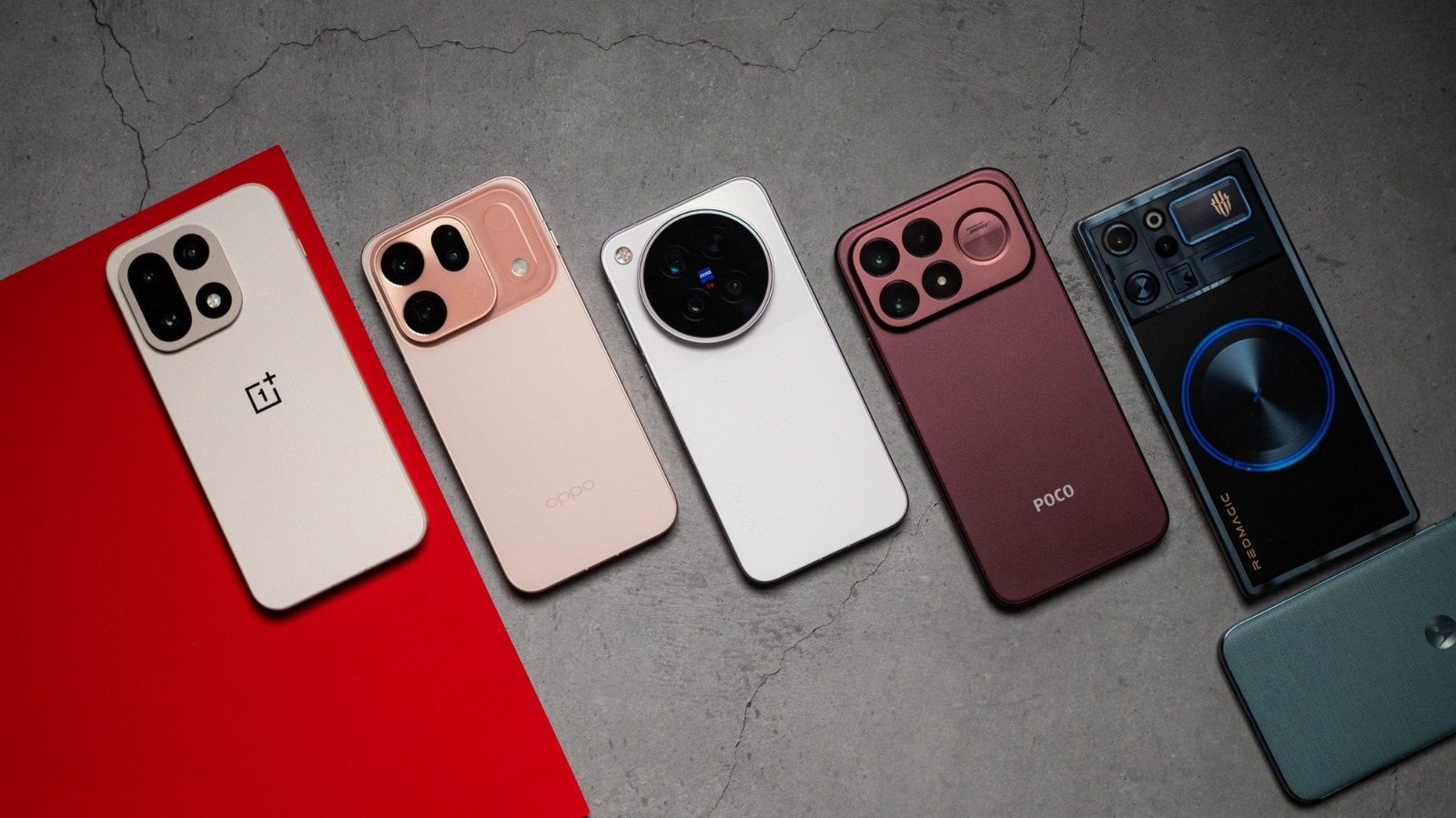
Which Android Phones Are Most Similar To The OnePlus 16?
While the OnePlus 16 isn't available in the US or Europe, there are lots of good alternatives.
5 TVs with deep discounts before Black Friday even started
You don't need to wait till later this month to snag an upgrade for your living room.

Jensen Huang and the decline of the visionary showman founder CEO
Nvidia CEO Jensen Huang at CES 2025 in Las Vegas, Nevada, on January 6, 2025. | Photo by Artur Widak/NurPhoto via Getty Images On January 6th, 2025, Nvidia CEO Jensen Huang got his rockstar moment at last. He strode triumphantly onstage, hand raised in the air, to the claps and cheers of a 14,000-person arena absolutely packed with influencers and fans, their faces awash in blue glow, as he made his entrance in a black leather jacket that shimmered in the stadium's lights. Few are cheering for Jensen Huang now. He has left Nvidia after seemingly enabling two chip smuggling scandals and allegedly having three extramarital affairs, including one with an alleged Chinese spy at the same time he was mingling with President Donald Trump. The world is watching to see if … Read the full story at The Verge.

FAA allows flights to resume after hours-long ground stop across the US
The FAA grounded flights for hours on November 13, and the transportation secretary blamed it on old and malfunctioning air traffic control system.

Amazon has a plan to index the world’s online shopping data
Amazon has plans to build a vault of data on every product sold anywhere on the internet, even products Amazon doesn't sell, and make the information available through its own site, according to Reuters. The project, called the "World Product Graph," is meant to make it less likely that shoppers leave Amazon to do their product research on Reddit or Google, and make it more likely shoppers end up at Amazon even if they're searching for a product sold elsewhere. The same goes for AI agents - if Amazon has the largest stockpile of shopping data, AI agents may rely on its index of products over others, so even people shopping with bots will end … Read the full story at The Verge.

Jensen Huang’s departure blasts big hole in AI startup funding, VCs and founders say
Nvidia poured tens of billions into AI startups under Huang. Without him at the helm, founders and VCs are bracing for smaller checks and lower valuations.

AI agent startup LangChain hits $3B valuation
LangChain now claims 7,000 customers of its model and platform agnostic agent management tool LangSmith.
You can now tempt fate and give your banking information to ChatGPT
The new Wallet feature will allow its AI agents to make purchases on your behalf.

Windows 0-day dropped by disgruntled researcher hands hackers System rights
"SignDrop" exploit lets local users gain all-powerful System rights.

The Download: Silicon Valley’s blind spot and Nvidia’s chip-tracking plan
This is today’s edition of The Download, our weekday newsletter that provides a daily dose of what’s going on in the world of technology. Silicon Valley claims to know the future. So why did it get the midterms so wrong? —Aaron Zamost, a tech communications consultant and a former executive at Square The self-styled visionaries…
More autonomy, fewer NDAs: Volunteers have new requests for brain implant trials
Scientists have been working on ways to decode brain activity for decades. Teams have developed brain implants that can be used to control robotic limbs and computers, and even to “speak.” The people who volunteer for trials of those devices play a vital role in that research, and they ought to be recognized for their…
Chainalysis says hackers stole credentials and tokens for all of its customers
Company said a "multifront cyberattack" included AI agents and an on-path data snatch.

Some of the best Nintendo Switch games are up to $30 off for Black Friday
Super Mario Odyssey is on sale for $29.99 for a limited time, which matches the game’s lowest price to date. | Image: Nintendo Nintendo has made some of the most iconic video games of all time, but building a library of the standouts can quickly become expensive, especially given that many titles don’t often go on sale at a significant discount. The good news is that Nintendo is already running a holiday sale in the run-up to Black Friday, allowing you to save on Nintendo Switch games, amiibo, and accessories through November 28th. The biggest news is that Nintendo and select retailers are offering some of the Switch’s best games — including Super Mario Odyssey and The Legend of Zelda: Echoes of Wisdom — for as little as $29.99, which amounts to a healthy $30 discount. In some cases, these games are at their lowest price ever, and we don’t expect any of them to be this heavily discounted again until “MAR10 Day” rolls around next year. Typically, Nintendo offers a discount on a Switch bundle that includes a digital copy of Mario Kart: 8 Deluxe or some other first-party title, but that doesn’t seem to be happening this year. The company has openly admitted that it’s shifting its focus to the Switch 2 — which isn’t on sale and isn’t expected to be anytime soon — and recently raised the price of the original Switch due to President Trump’s tariff policy. Sadly, no Switch 2 games are part of the promo; however, you can play the discounted OG Switch titles on Nintendo’s latest console. Plus, if you are looking for deals related to the Switch 2, Woot is still running a video game promo through the end of today, November 23rd, giving you a chance to save on newer releases like Mario Kart World and the Switch 2 Edition of The Legend of Zelda: Breath of the Wild. Super Mario Odyssey Super Mario Odyssey remains one of the crowning achievements of the original Switch thanks to its tight platforming, ingenious level design, and a game mechanic that lets you control certain enemies and parts of the environment. There are still bosses to battle and coins to collect, but Odyssey feels like a breath of fresh air. Read our review. Where to Buy: $59.99 $29.99 at Best Buy $59.99 $29.99 at Target $59.99 $29.99 at Amazon Princess Peach: Showtime! Princess Peach: Showtime! is the first Nintendo game to star the Mushroom Kingdom royal in nearly 20 years, and it’s a welcome return to form. Peach finds herself having to fight, puzzle, and platform her way through different sets in a community theater. She inhabits a different role — with different abilities — in each stage, which keeps the game engaging. Read our review. Where to Buy: $59.99 $39.99 at Best Buy $59.99 $29.99 at Target Donkey Kong Country Returns HD Donkey Kong Country HD is the definitive version of the tough-as-nails platformer, which initially launched on the Wii in 2016. Don’t let the game’s cartoonish art, bopping soundtrack, and side-scrolling gameplay fool you, though; it will test your skills. That said, it’s still a blast to work your way through the game’s tougher sections, which require both precision and patience. Read our review. Where to Buy: $59.99 $39.99 at Best Buy $59.99 $29.99 at Target $59.99 $29.99 at Amazon The Legend of Zelda: Echoes of Wisdom Echoes of Wisdom finally lets you play as Nintendo’s titular heroine. The game’s basic premise revolves around trying to save the world using the fabled Tri Rod, an item that allows you to replicate the spirits of items and enemies you encounter along the way. The game mixes the top-down perspective of 2D Zelda games with gameplay from the series’ newer, open-world 3D entries. Read our review. Where to Buy: $59.99 $39.99 at Best Buy $59.99 $29.99 at Target Luigi’s Mansion 3 Luigi’s Mansion 3 is the series’s most ambitious title, even though it retains the Luigi-as-a-Ghostbuster gameplay the series has employed since 2001. It takes place in a haunted hotel overrun with ghosts. To deal with them, you’ll need the help of Gooigi, a doppelgänger made of goop that can help you explore every nook and cranny. The game’s slapstick humor outweighs any spookiness. Read our review. Where to Buy: $59.99 $39.99 at Best Buy $59.99 $39.99 at Target $59.99 $39.99 at Amazon Nintendo Switch Sports Nintendo Switch Sports didn’t change the world the way Wii Sports did in 2006, but it remains a fun party game. You can choose from six sports, including tennis and bowling, and use a single Switch Joy-Con as a motion controller. There’s an element of “swing the controller and hope the correct action happens on screen,” but it’s still a good time to play with friends. Read our review. Where to Buy: $49.99 $39.99 at Best Buy $49.99 $29.99 at Target $49.99 $29.99 at Walmart Paper Mario: The Thousand-Year Door Paper Mario: The Thousand-Year Door is generally regarded as the best Mario RPG, and the Switch remake is well worth revisiting. Mario has more paper-like abilities than he did in the original Paper Mario game (including the option to turn into a paper airplane), and Nintendo didn’t feel the need to shake up the battle system or other gameplay elements like they did in subsequent entries. Where to Buy: $59.99 $29.99 at Best Buy $59.99 $29.99 at Target Splatoon 3 Splatoon 3 is the latest entry in Nintendo’s paint-laden shooter franchise, and the hook this time around is a deeper single-player mode. You’ll assume the role of an undercover agent fighting through a city using a mix of shooting and platforming. As you progress, you’ll begin to find artifacts of the pre-apocalypse that shine a light on what happened in the Splatoon universe. Read our review. Where to Buy: $59.99 $29.99 at Best Buy $59.99 $29.99 at Target $59.99 $17.44 at Amazon Kirby’s Return to Dream Land Deluxe Kirby’s Return to Dream Land Deluxe is another HD remake of a Wii game, but it introduces additional abilities, mini games, and an entirely new section that’s available once you complete the original story. The game doesn’t shake up the Kirby formula, but it’s still a fun game to play — especially with friends, as it supports four-player local co-op. Where to Buy: $59.99 $39.99 at Best Buy $59.99 $39.99 at Target $59.99 $39.99 at Amazon Tulin amiibo Tulin is a Rito and the Sage of Wind from The Legend of Zelda: Tears of the Kingdom. His amiibo will grant random items in both The Legend of Zelda: Breath of the Wild and its aforementioned sequel. Where to Buy: $29.99 $9.99 at Amazon $29.99 $9.99 at Best Buy $29.99 $19.99 at Target Yunobo amiibo Yunobo is a Goron and the Sage of Fire from The Legend of Zelda: Tears of the Kingdom. Using his amiibo will drop random items in both that game and The Legend of Zelda: Breath of the Wild. Where to Buy: $29.99 $9.99 at Amazon $28.99 $9.99 at Best Buy $29.99 $19.99 at Target Riju amiibo Riju is a Gerudo and the Sage of Lightning from The Legend of Zelda: Tears of the Kingdom. Using her amiibo will drop random items in both that game and The Legend of Zelda: Breath of the Wild. Where to Buy: $29.99 $9.99 at Amazon $29.99 $9.99 at Best Buy $29.99 $19.99 at Target Sidon amiibo Sidon is a Zora and the Sage of Water from The Legend of Zelda: Tears of the Kingdom. Using his amiibo will drop random items in both that game and The Legend of Zelda: Breath of the Wild. Where to Buy: $29.99 $9.99 at Amazon $29.99 $9.99 at Best Buy $29.99 $19.99 at Target Jamie amiibo Jamie is a character in Street Fighter 6, and using his amiibo lets you save his outfit, color, and your own custom button settings. The amiibo also unlocks in-game rewards, including music and wallpaper. Where to Buy: $39.99 $19.99 at Amazon $39.99 $14.99 at Best Buy $39.99 $29.99 at Target Kimberly amiibo Kimberly is a character in Street Fighter 6, and using her amiibo lets you save her outfit, color, and your own custom button settings. The amiibo also unlocks in-game rewards, including music and wallpaper. Where to Buy: $39.99 $14.99 at Best Buy $39.99 $29.99 at Target $39.99 at Nintendo Luke amiibo Luke is a character in Street Fighter 6 who made his series debut in Street Fighter V: Champion Edition. Using his amiibo lets you save his outfit, color, and your own custom button settings in Street Fighter 6. The amiibo also unlocks in-game rewards, including music and wallpaper. Where to Buy: $39.99 $14.99 at Amazon $39.99 $14.99 at Best Buy $39.99 $29.99 at Target

X’s messy About This Account rollout has caused utter chaos
Yesterday X started rolling out a new About This Account feature, which included what country the account was created from and what country the account is “based” in (which is different from “connected via”). Head of product at X, Nikita Bier, was quick to say that there were “a few rough edges,” but promised they’d be resolved by Tuesday. There have definitely been complaints about inaccuracies. The company even ended up removing information about where an account was created, saying the data “was not 100 percent,” especially for older accounts. The reaction from users on X was, of course, totally level-headed. They immediately recognized that the data was flawed and definitely didn’t spend the last 24 hours trying to score political points. Just kidding. People on X have done almost nothing but shout that accounts they disagree with are actually foreign operatives. Even users who have publicly complained that the information on their own profile was inaccurate continued on to make bad-faith posts about how their political opponents were running a foreign psyop. The inaccurate data could have several causes. People who travel, or outlets with staff scattered around the globe, might appear to be “based” somewhere other than where they actually are, at least temporarily. If someone uses a VPN, it could affect where X shows their location. Some of it could just be old IP addresses. At the time of this writing, Hank Green’s account is listed as being based in Japan, MusicTech (a sister publication to the UK’s NME) is showing as based in the US, and AVID (Massachusetts-based maker of ProTools) is listed as being in Spain. Of course, there is also a kernel of truth to some of this. Many political rage-bait accounts are not based in the US. We’ve long known that troll farms have been waging a foreign influence campaign on American politics. But some of it is also a financial scheme. Monetization on X is largely driven by engagement, and nothing gets people engaged like riling them up about politics.

Valve says that the Steam Machine's price will be more 'in line with current PC market'
Valve shook up the gaming world with the announcement of the Steam Machine, but we're all still curious about the million-dollar question of pricing. While there's plenty of speculation, we finally have some sort of indication from Valve directly. In an interview with Skill Up's Friends Per Second podcast, Valve's Pierre-Loup Griffais revealed that the Steam Machine will not be subsidized but will still have competitive pricing. "I think that if you build a PC from parts and get to basically the same level of performance, that’s the general price window that we aim to be at," Griffais said on the podcast. "Obviously, our goal is for it to be a good deal at that level of performance, and then you have features that are actually really hard to build if you’re making your own gaming PC from parts." Griffais didn't offer a concrete price range since Valve was still early in the process, adding that "right now is just a hard time to have a really good idea of what the price is going to be because there’s a lot of different things that are fluctuating." When asked if the Steam Machine would be subsidized like how other companies often sell new consoles at a loss or slim profit margin to generate early momentum, Griffais said no and that it would be "more in line with what you might expect from the current PC market." However, Griffais also revealed that Valve is potentially interested in doing a Steam Machine Pro, but that the company is currently focused on this mid-range level as a "good trade off between affordability and the level of power we get." This article originally appeared on Engadget at https://www.engadget.com/gaming/valve-says-that-the-steam-machines-price-will-be-more-in-line-with-current-pc-market-182213173.html?src=rss
Amazon Black Friday deals: Get the Echo Spot smart alarm clock for only $50
Amazon is selling the Echo Spot smart speaker for just $50 as part of a Black Friday promotion. The sale applies to multiple colorways and represents a discount of $30. This isn't a record low price, but it's extremely close. For the uninitiated, the Echo Spot is a diminutive little speaker/alarm clock hybrid unit. It's a cute little doodad and looks great on a nightstand. The screen is customizable, so it doesn't have to display a clock. It can show song titles, smart home control dashboards, the weather and a lot more. Of course, there are numerous clock faces to choose from. The Spot not only integrates with Amazon's smart assistant Alexa, but it provides access to the newfangled Alexa+. This is a smarter and more conversational version of the iconic smart assistant. Like most modern AI products, it's still working out some bugs. The underlying tech, however, is promising. The speaker is decent enough for the size, though you won't be using it to fuel any house parties. It's a great tool for bedroom-based listening. This version doesn't have a camera, which is actually great news for the privacy conscious. In addition to the Echo Spot, you'll even find Black Friday deals on some of the latest Echo devices that just came out last month. The Echo Dot Max is on sale for $90, the new Echo Studio has dropped to $190 and the latest Echo Show 8 has been discounted to $160. This article originally appeared on Engadget at https://www.engadget.com/deals/amazon-black-friday-deals-get-the-echo-spot-smart-alarm-clock-for-only-50-130550383.html?src=rss
AI is too risky to insure, say people whose job is insuring risk
Major insurers including AIG, Great American, and WR Berkley are asking U.S. regulators for permission to exclude AI-related liabilities from corporate policies. One underwriter describes the AI models’ outputs to the FT as "too much of a black box."

Snapdragon devices will soon be able to transfer files to iPhones via Quick Share
Building on Google's recent announcement that Android's Quick Share will work with iOS' AirDrop for Pixel 10 smartphones, Qualcomm revealed in a post on X that the cross-platform file-sharing feature will be available on devices powered by its Snapdragon chips. In the post, Qualcomm said that it "can't wait for people to use this once enabled on Snapdragon in the near future." It's not a complete surprise since Google mentioned in its announcement that Quick Share to AirDrop would come to more Android devices. However, the Snapdragon confirmation acknowledged that this new compatibility wouldn't be limited to Pixel smartphones or devices running Google Tensor chips. Soon, we could have the ability to share files with iPhone users, even if it's with a Samsung Galaxy smartphone, a OnePlus device or even Nothing phones. Qualcomm didn't specify exactly when or which smartphones will get this Quick Share to AirDrop feature, but we might see it come to more devices than just smartphones, like tablets or laptops. Along with this latest file-sharing feature, Apple's announcement of iOS 18 getting RCS compatibility has reduced the longstanding friction between smartphone operating systems. This article originally appeared on Engadget at https://www.engadget.com/mobile/smartphones/snapdragon-devices-will-soon-be-able-to-transfer-files-to-iphones-via-quick-share-164835065.html?src=rss
Apple Black Friday deals: The iPad A16 drops to a record-low price
If you’ve been waiting to grab a new iPad at a lower price, this might be the time. The iPad A16 is on sale for $279 thanks to Black Friday, which is a solid drop from its usual list price. It’s the best budget tablet in Apple’s lineup and a great pick for streaming, note-taking or browsing without spending Pro-level money. Apple’s latest 11-inch iPad uses the A16 chip, the same processor found in the iPhone 15, delivering fast and reliable performance for most tasks. Whether you’re watching videos, editing documents or using creative apps, it feels responsive and capable. The A16 chip also helps future-proof the device, ensuring it stays compatible with new iPadOS updates for years. The tablet’s 11-inch Liquid Retina display (2360 x 1640) offers sharp detail and vivid color at up to 500 nits of brightness. While it doesn’t have the ultra-bright XDR panel of the iPad Pro, it’s more than crisp enough for streaming or sketching with the Apple Pencil. The design follows Apple’s familiar flat-edge style, with slim bezels and an aluminum build that keeps it light and durable. The iPad includes a 12MP rear camera and a 12MP front-facing Center Stage camera, which automatically adjusts to keep you in frame during video calls. The front camera is positioned along the longer landscape edge, which gives a more natural angle for calls or recordings. You also get Wi-Fi 6, Bluetooth 5.3, USB-C for charging and data transfer, plus Touch ID built into the top button. Battery life runs up to 10 hours on Wi-Fi, which is consistent with Apple’s other models. Accessory support covers the Apple Pencil (USB-C) and the first-generation Apple Pencil with the USB-C adapter, along with the Magic Keyboard Folio. It doesn’t work with the Apple Pencil Pro, but for casual drawing, note-taking or quick document markup, these accessories add plenty of flexibility. The A16 iPad sits at the entry point of Apple’s lineup, but it shares a lot of what makes its pricier siblings appealing. You get a polished display, dependable performance and the familiarity of iPadOS without the premium cost. It’s an ideal choice for students, casual users or anyone who wants a reliable tablet for daily use. If you’re still deciding which model fits you best, check out our guide to the best iPads to compare the A16 against the Air and Pro models. At $279, this iPad deal offers excellent value for Apple’s newest entry-level tablet. Also on sale for Black Friday is the 11-inch iPad Air M3, which is down to $449. This article originally appeared on Engadget at https://www.engadget.com/deals/apple-black-friday-deals-the-ipad-a16-drops-to-a-record-low-price-125224123.html?src=rss
ChatGPT told them they were special — their families say it led to tragedy
A wave of lawsuits against OpenAI detail how ChatGPT used manipulative language to isolate users from loved ones and make itself into their sole confidant.

Sony’s last-gen XM4 headphones are over 50 percent off for Black Friday
The current discount takes nearly $200 off the original list price. More than five years after making their debut, Sony’s WH-1000XM4 remain an excellent pair of noise-canceling headphones. And right now, Best Buy is offering a doorbuster deal that drops them to just $159.99 ($190 off) for a limited time, which is the lowest price we’ve seen this year. If you prefer the latest tech, you can also snag the newer XM6 for about $398 ($60 off) at Amazon, Best Buy, and Target. Sony WH-1000XM4 Where to Buy: $349.99 $159.99 at Best Buy $349.99 $189.99 at Sony $349.99 $348 at Walmart We once considered the XM4 to be the best headphones you could buy. We replaced them with the XM5, followed by the XM6 three years later, but the last-last-gen model is still a solid pick in 2025. The XM4 offer great sound quality, up to 30 hours of battery life, and terrific active noise cancellation, even if the ANC can’t quite compete with Sony’s newer models. They support multipoint connectivity, allowing you to pair them with two devices simultaneously, along with great voice call performance. They also feature a handy Speak to Chat feature, which can automatically pause your audio when you start speaking. Additionally, the XM4 support wear detection, meaning they will automatically pause whatever is playing when you remove them from your head and resume playback when you put them back on. And unlike the last-gen XM5, the comfortable headphones fold when not in use, making it relatively easy to slide them into your bag. As for what you miss out on by opting for the XM4 over the XM6, Sony’s latest model offers improved sound quality, more powerful ANC, and even clearer voice calls. You can also charge the XM6 while listening to them, though you’ll need to juggle two cables — a USB-C and a 3.5mm — since they don’t support audio over USB-C. Read our full WH-1000XM4 review.
One of our favorite ice cream makers is down to $180 for Black Friday
Ice cream might not be the first dessert that springs to mind in late fall, but there’s no bad season for frozen treats, and our favorite ice cream maker is down to $180 for Black Friday. This kitchen gadget, which scored 90 in our review, is guaranteed to make you popular with guests during the holiday season, and at $50 off its regular price of $250 — the lowest price we’ve seen this year for this particular model — now is a great time to buy. While you’ll definitely need a bit of space to accommodate it, the Creami is a more compact ice cream machine than some of its rivals. It works similarly to a food processor, only here you’ll be using strictly frozen liquid ice cream as a base. Once you have that (you’ll need to give the base around 24 hours in the freezer for the desired consistency) you use Ninja’s machine to blend in your chosen flavors. And if you make a mess (and let’s face it, you probably will), rest assured that most of the components are dishwasher-safe. It’s admittedly a fairly loud machine during use, but as long as you’re willing to put up with the noise, you can choose between seven one-touch programs, including milkshake if you’re in the mood for a cold drink. And if you’re hosting people with allergies, they can be reassured that you have total control about what’s going into and coming out of the machine, which is much harder to guarantee when you’re buying dessert in a restaurant. This model also includes two pint containers with lids. If you want the latest and greatest, though, the Ninja Swirl is the ice-cream maker to get. It can make regular and soft-serve ice cream, plus a number of other frozen treats. Right now, QVC has it for the best price we've seen, from $350 to $280. This article originally appeared on Engadget at https://www.engadget.com/deals/one-of-our-favorite-ice-cream-makers-is-down-to-180-for-black-friday-133009181.html?src=rss
Game Theory Explains How Algorithms Can Drive Up Prices
Recent findings reveal that even simple pricing algorithms can make things more expensive.
Dyson Black Friday deals: Save up to $600 on robot vacuums, cordless vacuums and more
Dyson is holding its Black Friday sale on vacuums and related products. To that end, the Dyson 360 Vis Nav robot vacuum is a whopping $600 off and down to $400 right now. That's $100 less than its previous all-time low and the cheapest we've seen it. Dyson was pretty late to the robot-vacuum party, but its entry was (and remains) one of the strongest in the category. It doesn't have a lot of bells and whistles like a self-emptying base or mopping capabilities, but it makes up for that by having probably the best suction power of any robovac we've tested. All kinds of debris will fall in its path: dirt, dust, food crumbs, pet hair and more. It also has excellent obstacle avoidance, so you'll rarely — if ever — have to dislodge it from getting stuck on the edge of a carpet or wedged in between furniture. Dyson's mobile app is easy to use as well, so if you're looking for a robot vacuum that does its main job incredibly well and you don't mind skipping on some extras, the 360 Vis Nav is a great option. Cordless vacuums are also a part of the sale. Take the Dyson V9 Motorbar cordless vacuum on sale for just $270 at both Dyson and Amazon, which is a discount of $330. That's more than half off. Dyson devices are all over our list of the best cordless vacuums, and for good reason. The company makes effective products. The V9 Motorbar has been designed to clean all floor types, in addition to upholstery. It's also been engineered to squeeze into tight spots, which is great for hitting those oft-neglected parts of the home. The suction power is on point and the battery lasts for 40 minutes before requiring a charge. That's just enough time to vacuum a standard-sized home if you don't stop for too many breaks. The V9 is getting a bit long-in-the-tooth. If you want a newer model, the V11 Extra is on sale for $400, which is a discount of $260. This one boosts the suction power and increases the battery life to 60 minutes. More Dyson Black Friday deals Dyson V11 cordless vacuum for $400 ($260 off) at Amazon and Dyson Dyson V9 Motorbar cordless vacuum for $270 ($330 off) at Amazon and Dyson Dyson V12 Detect Slim cordless vacuum for $400 ($330 off) at Amazon and Dyson Dyson AM09 Hot+Cool jet focus heater and fan for $300 ($200 off) at Amazon and Dyson Dyson Supersonic hair dryer for $300 ($150 off) at Amazon and Dyson Dyson Airwrap ID hair styler for $520 ($130 off) at Amazon and Dyson This article originally appeared on Engadget at https://www.engadget.com/deals/dyson-black-friday-deals-save-up-to-600-on-robot-vacuums-cordless-vacuums-and-more-173533989.html?src=rss
Black Friday VPN deals: Get up to 75 percent off Proton VPN two-year plans
A VPN subscription can make for a good holiday gift. Everyone could do with having a VPN to help protect their online activity from prying eyes (and, perhaps, access more things to watch from their favorite streaming services). It's something useful that a gift recipient may have never realized they needed. Of course, you may be looking for a great deal on a VPN yourself, and the Black Friday discount for Proton VPN is nothing to sniff at. You can get two years of access to the VPN Plus tier of the service for $59.76, which works out to $2.49 per month. That's a discount of 75 percent compared with the regular price of $10 per month. Overall, you'd save $180. Proton VPN is our pick for the best VPN overall because it checks all of the boxes it needs to. There is a free plan with unlimited data, but with that you can only connect to servers in a few countries and the connection might not be fast enough for you to watch anything from your preferred streaming service's library in that locale. The VPN Plus tier unlocks a lot more options, such as the ability to connect to 15,000 servers across more than 120 countries and simultaneous protection for up to 15 devices. The apps are well-designed — Proton has clients for Windows, Mac, iOS and Android — and it's easy to find a feature or setting you're looking for. In our testing, Proton VPN Plus had a relatively small impact on browsing speeds. Our download speeds dropped by 12 percent and uploads by 4 percent, while the global average ping remained below 300 ms (which is especially impressive if you're connecting to a server on the other side of the planet). Perhaps, most importantly, though, it's Proton's commitment to privacy that helps make its VPN an easy recommendation. There's a no-logs policy, meaning it does not log user activity or any identifiable characteristics of devices that connect to the VPN. Proton's servers use full-disk encryption to bolster privacy as well. Proton VPN is not the only service to offer a Black Friday VPN deal this year, of course. There are plenty of others available on services we like. Here are the best of the bunch if you're looking for an alternative to Proton VPN. Surfshark One (24 months + 3 free months) for $59.13 (88 percent off): A VPN is great, but it's not enough to protect your data all on its own. Surfshark One adds several apps that boost your security beyond just VPN service, including Surfshark Antivirus (scans devices and downloads for malware) and Surfshark Alert (alerts you whenever your sensitive information shows up in a data breach), plus Surfshark Search and Alternative ID from the tier below. This extra-low deal gives you 88 percent off all those features. NordVPN Plus (24 months + 3 free months) for $105.03 (74 percent off): NordVPN has taken 74 percent off its Plus subscription for Black Friday. For only a little more, you get a powerful ad and tracker blocker that can also catch malware downloads, plus access to the NordPass password manager. A Plus plan also adds a data breach scanner that checks the dark web for your sensitive information. CyberGhost (24 months + 4 free months) for $56.94 (84 percent off): CyberGhost has some of the best automation you'll see on any VPN. With its Smart Rules system, you can determine how its apps respond to different types of Wi-Fi networks, with exceptions for specific networks you know by name. Typically, you can set it to auto-connect, disconnect or send you a message asking what to do. CyberGhost's other best feature is its streaming servers — I've found both better video quality and more consistent unblocking when I use them on streaming sites. Private Internet Access (36 months + 4 free months) for $79.20 (83 percent off): Private Internet Access (PIA) is giving out the best available price right now on a VPN I'd recommend using. With this deal, you can get 40 months of PIA for just under $2 per month — an 83 percent discount on its monthly price. Despite being so cheap, PIA has plenty of features, coming with its own DNS servers, a built-in ad blocker and automation powers to rival CyberGhost. However, internet speeds can fluctuate while you're connected. This article originally appeared on Engadget at https://www.engadget.com/deals/black-friday-vpn-deals-get-up-to-75-percent-off-proton-vpn-two-year-plans-153737542.html?src=rss
Our favorite budgeting app has 50 percent off subscriptions right now for Black Friday
Now's the time of year you might be reconsidering how you budget your finances, or establishing a plan if you don't have one already. While it's possible to do it all yourself, budgeting apps can automate some processes and make it easier to see where your money is going and patterns, both good and bad, that might be occurring. For Black Friday, you can get 50 percent off our favorite budgeting app, Quicken Simplifi. The Quicken Simplifi app is down to $3 monthly from $6 monthly, adding up to $36 for the year. Quicken Classic, the company's "original desktop software" for "experienced investors" is also half off at $6 monthly, down from $12 monthly. The sale starts today and is available until Wednesday, December 3. One of the many things that sets Quicken Simplifi apart from its competitors is its sleek, easy to use interface. The setup is pretty straightforward and it allows for your spouse or financial advisor to act as co-manager of the account. It also clearly shows figures like net worth, recent spending, upcoming recurring payments and more. Plus, there's an option to say if you're expecting a refund. Quicken Simplifi unfortunately doesn't offer a free trial so testing it out with a discount means less money invested if it's not for you. This article originally appeared on Engadget at https://www.engadget.com/deals/our-favorite-budgeting-app-has-50-percent-off-subscriptions-right-now-for-black-friday-160025119.html?src=rss

The base model Kindle is the e-reader most people should buy, and it's only $80 right now
The base model Kindle is ideal for most users, and it's available for under $100 during Amazon's Black Friday sale.
Best Walmart Black Friday deals live now: Save up to 60% on AirPods, TVs, Dyson vacuums, and more
Walmart's early Black Friday deals are here, with big discounts on laptops, kitchen gadgets, and more (including the lowest-ever prices on AirTags, AirPods, and Apple Watches).

Shocker: Elon Musk spends a lot of time on X posting bad political takes
NBC News's David Ingram analyzed a month's worth of Elon Musk's X posts (our condolences). While what he was able to glean wasn't too surprising, it was still interesting to see the numbers all laid out. Between September 17th and October 17th, he posted 1,716 times, averaging a little over 55 posts a day. 49 percent of those were about politics, usually fringe. He seems particularly hung up on the race of people on TV and in movies, including going after child actors. Other things Elon likes to talk about? Crime, Tesla - oh, and of course, himself. Over the 30 days, Elon posted about himself 109 times. He often even reposts his own stan ac … Read the full story at The Verge.
Trump administration might not fight state AI regulations after all
A Trump administration order targeting state-level AI regulation is reportedly on hold.
Apple TV+ Black Friday deal: Get six months of access for only $36
If you’ve been waiting to try Apple TV+, now’s the time to jump in. You can get six months of access for only $36 for Black Friday, giving you a chance to stream award-winning originals like Severance, Ted Lasso and The Morning Show. The offer is live for a limited time through December 1, so if you haven’t signed up before, it’s a great time to see what the service has to offer. The biggest caveat to the deal is that you must subscribe directly through Apple and not through a third-party service. Apple TV+ continues to build one of the strongest lineups in streaming. Its library includes standout originals like Ted Lasso, Severance, Slow Horses, For All Mankind, Foundation and Silo, along with newer releases such as The Studio and Dope Thief. On the film side, you’ll find the 2022 Best Picture winner CODA, plus Killers of the Flower Moon, Blitz and Tetris. Apple’s streaming service has earned plenty of recognition since launch. Apple TV+ shows picked up 10 Emmy Awards in 2024, including a win for Slow Horses for outstanding writing in a drama series. Apple TV+ also offers a polished streaming experience. All content is ad-free and available in up to 4K HDR, with Dolby Vision and Dolby Atmos support where available. The app works on nearly every device, from iPhone and iPad to smart TVs, PlayStation, Xbox and Roku. You can also download episodes and movies to watch offline, which is handy for travel or long commutes. If you’re already invested in Apple’s ecosystem, the integration is seamless. You can share your subscription with up to five other people through Family Sharing, and playback syncs across devices so you can start a show on your iPhone and finish it on your TV. Apple TV+ is also part of the Apple One bundle if you prefer to manage multiple Apple services under a single plan. This deal is available to new and qualified returning subscribers, meaning those who haven’t had an active subscription in the past 30 days. You’ll need to sign up directly through Apple rather than a third-party service or carrier. Once the three-month period ends, the plan renews at the standard $13 per month, so be sure to cancel before the renewal date if you don’t want to continue. With a growing slate of original series, award-winning films and a slick interface, Apple TV+ has turned into one of the best streaming services for premium content. And with this limited-time deal, you can catch up on its biggest hits without paying full price. This article originally appeared on Engadget at https://www.engadget.com/deals/apple-tv-black-friday-deal-get-six-months-of-access-for-only-36-203322621.html?src=rss
Black Friday subscription deals 2025: Early sales on Apple TV+, MasterClass, Fubo, Rosetta Stone and more
This page is your go-to resource for Black Friday subscription deals. From now through the end of November and beyond, we'll be scouring the internet to find the steepest discounts and cheapest offers for all the best subscription services. The top streaming platforms are all giving out subscriptions like they were leftover turkey, but we've also found great deals on VPNs you can use to coax even more out of your streaming subscriptions. There are great learning apps, too, like Rosetta Stone and MasterClass, plus even more deals on services like DeleteMe and Quicken. Check back here daily — we're always adding exciting new deals to the list. Best Black Friday subscription deals Quicken Simplifi (one year) for $36 (50 percent off): We named Quicken Simplifi the best budgeting app this year largely because it lives up to its name. This is the cleanest budgeting app on the market, with an interface designed to welcome newcomers and no key information more than a scroll away. It's also cheap, especially with this Black Friday deal, and very good at detecting and categorizing your important transactions. Monarch Money (one year) for $50 (50 percent off with code MONARCHVIP): Monarch Money, our other favorite budgeting app, is giving new users half off for Black Friday. It's a little more complex than Quicken Simplifi, but it also gives you finer-grained control, including detailed reporting, balance sheets and instant graphs. The standout goals feature lets you establish savings and wealth baselines that feel amazing when you hit them. Rosetta Stone Lifetime Unlimited subscription for $149 (60 percent off): Rosetta Stone was pioneering visual language courses back when software still came in boxes, and it's still one of the best language learning apps. Today, its method works as well as ever, with patient learning based on pictures, terms and recordings. This deal gets you a full lifetime subscription with access to all 25 languages in the library. Audible (three months) for $3 (80 percent off): For literally $1 per month, you can get access to Audible's enormous library of published audiobooks, podcasts and Audible Originals (which can be anything from never-before-heard books to live performances). It's only three months, after which you'll have to cancel or renew at the regular price, but an audiobibliophile can cram a lot of listening into 90 days. Headspace (one year) for $35 (50 percent off): Out of all the meditation apps available, Headspace is our favorite. It doesn't just help you relax and de-stress, but also teaches you to practice meditation as a skill, with sessions building on each other in organized courses. There's a massive library of standalone guided meditations with all kinds of instructors, and it's easy to search for the ones that work best for you. This deal gives you half off a full year. Calm Premium (one year) for $40 (50 percent off): Once you've finished your Headspace meditation, head over to Calm for every other stress-relieving activity you can think of. This packed subscription gives you a huge library of relaxing content, from music and restful soundscapes to its popular "sleep stories" with celebrity narrators telling bedtime stories for children and adults alike. If you've ever wanted to be lulled to sleep by Harry Styles, Matthew McConaughey or Idris Elba, this app is for you. 1Password (one year) for $24 (50 percent off): Using a password manager is one of the most important cybersecurity steps you can take right now. 1Password generates strong, unique passwords for every account, then saves them to autofill when you need them. We named it the best password manager in honor of its well-designed user interface and cross-platform compatibility. DeleteMe (all services) for 30 percent off with code BFCM30OFF25: DeleteMe scrubs your information from people search sites and other public-facing data brokers, dramatically reducing your online presence. It's a time-saving and user-friendly automation of a Since using it monthly, we've noticed a sharp decrease in the amount of spam emails, texts and calls to our personal addresses. Adobe Creative Cloud (one year) for $420 (50 percent off): Creative Cloud is Adobe's most comprehensive design package, including InDesign, Illustrator, Photoshop, Premiere and over 20 other apps. Whip up a website with Dreamweaver, paint on a digital canvas with Fresco or edit photos in Lightroom. It's a pretty steep cost for an individual, but puts a one-year subscription well within reach of a creative business. Best Black Friday streaming deals Apple TV+ (6 months) for $36 ($42 off): Apple TV+ is offering six months of access for only $36 for Black Friday, which comes out to a discounted price of $6 per month for the six-month period. The deal is live now for new and eligible returning subscribers and runs through December 1, giving you a chance to stream shows like Silo, The Morning Show and For All Mankind for less. The biggest caveat to the deal is that you must subscribe directly through Apple and not through a third-party service. Sling TV Orange Day Pass for $1 (80 percent off): Sling TV is one of the best live streaming services, and has one of streaming TV's most unique deals: a commitment-free day pass that lets you stream whatever you want for 24 hours, including cable channels and exclusive sports. Normally, a day pass costs $5, but this Black Friday deal knocks that all the way down to $1. Plex (lifetime pass) for $150 (40 percent off): Plex offers personal media servers you can use to organize your digital collection — imagine your own curated Netflix homepage that nothing ever vanishes from. It's also a streaming platform in its own right, with movies and TV from all genres and eras. Plex did just raise its prices, so now's your chance to get a lifetime pass for close to what it used to cost. Walmart+ (one year) for $49 (50 percent off): No, Walmart hasn't started its own streaming platform, but it would probably have some pretty great drama. What you do get with Walmart+ is free shipping on carts over $35, exclusive deals, drone delivery in some cities and more. And if you did come here for streaming, Walmart+ also comes with your choice of Peacock Premium of Paramount+ Essential (we recommend Peacock Premium because it's more expensive on its own). Best VPN deals for Black Friday ExpressVPN Basic (15 months) for $52.39 (73 percent off): ExpressVPN may be the most user-friendly VPN for sale right now, with fast download speeds (only 7 percent losses in our last test), quick connections and apps designed to stay out of your way. It's not the most feature-rich, but it excels at any bread-and-butter VPN task, staying leak-free and unblocking Netflix everywhere. You also get access to server locations in 105 countries. Surfshark Starter (27 months) for $53.73 (87 percent off): According to the tests we ran for our latest review, Surfshark is the fastest VPN right now, with its download speeds, upload speeds and latencies all beating out competitors. It has more to offer beyond speed, too, as it's able to constantly rotate your IP address and generate double VPN paths between any two servers you choose. NordVPN Basic (27 months) for $80.73 (74 percent off): NordVPN got very positive marks in our last review, where we called out its fast internet speeds, wide network of server locations and selection of exclusive features. It comes with a range of dedicated servers for obfuscation, onion routing, torrenting and more. Plus, it's one of the first VPNs getting a jump on post-quantum encryption. CyberGhost VPN (28 months) for $56.84 (84 percent off): CyberGhost is always cheap — in fact, we named it the best budget VPN — but it's never behaved like an economy option. Its Smart Rules automation controls are the deepest in the industry, and its server network reaches 100 countries. Speeds are also quite good, though connections occasionally take a moment to establish. Private Internet Access VPN (40 months) for $79.20 (83 percent off): Although we weren't wholly positive about Private Internet Access (PIA VPN) in our recent review, we can't deny it's a worthwhile choice for an affordable VPN. Although speeds can fluctuate, it comes with lots of desirable features on all platforms, like port forwarding (which makes torrents more stable) and two kinds of split tunneling. This article originally appeared on Engadget at https://www.engadget.com/deals/black-friday-subscription-deals-2025-early-sales-on-apple-tv-masterclass-fubo-rosetta-stone-and-more-180000334.html?src=rss
Best early Black Friday laptop deals 2025: 20+ sales live now
Black Friday is less than a week away, and the big sales are kicking off now. Here are the best laptop deals we've found so far, including the new MacBook Air M4 for 25% off.
Black Friday deal: Get $50 off the Xreal One Pro smart glasses
If you've been thinking about jumping on the smart glasses bandwagon, Black Friday deals could help you do so for less. Xreal has discounted its One Pro smart glasses by $50 for Black Friday, bringing them down to $599. The sale applies to both sizes. These glasses are the real deal. We praised them in our official review, saying they offer similar functionality to the Apple Vision Pro, but at a much friendlier price point. Wearing these glasses allows access to a massive 222-inch virtual display that can be used for just about anything. The glasses connect to laptops, gaming consoles and smartphones, among other gadgets. The 1080p Micro-OLED screens are surprisingly bright and sharp, which makes this device great for both work and consuming content. The frames even darken to give the illusion of wearing sunglasses. The glasses are light and comfortable, especially when compared to the Vision Pro. However, the comfort does come at a price. These oversized glasses are not as immersive as Apple's product, because they don't completely block out light and cover the entire face. They offer a 57-degree field of view. This is squarely an augmented reality product and not a virtual reality product. The company has also discounted its Xreal One AR glasses to $399, which is a discount of around $100. These offer smaller virtual screens than the Pro, with a 50-degree field of view. This article originally appeared on Engadget at https://www.engadget.com/deals/black-friday-deal-get-50-off-the-xreal-one-pro-smart-glasses-113032924.html?src=rss

Sony’s entire DualSense lineup is $20 off, including the limited edition models
Black Friday isn’t here quite yet, but that hasn’t stopped Sony from kicking off an excellent holiday promo, which runs through December 18th. The ongoing sale spans everything from PlayStation 5 consoles to Sony’s latest accessories — including Sony’s standard DualSense Wireless Controller, which is now matching its all-time low of $54.99 ($20 off) in multiple colors at Amazon, Best Buy, and Target. Although the aforementioned deal price applies to Sony’s base models — including the go-to black and white variants — you can also pick up limited edition models inspired by Astro Bot (Walmart / Best Buy), God of War (Amazon / Walmart), and Ghost of Yōtei (Walmart / Best Buy) for around $64 (also $20 off). The controllers start at a higher price than the vanilla models, but recognize that you’re still getting them for $10 less than a regular DualSense normally costs. Sony DualSense Wireless Controller Where to Buy: $74.99 $54.99 at Amazon $74.99 $54.99 at Best Buy $74.99 $54.99 at Target Astro Bot “Joyful” DualSense Wireless Controller Where to Buy: $84.99 $64.99 at PlayStation $84.88 $64 at Walmart $84.99 $64.99 at Best Buy The DualSense will look familiar to longtime PlayStation fans, but it has significant technical features that set it apart from Sony’s earlier DualShock gamepads. A good example is the wireless controller’s haptic vibrations, which can make gameplay feel more immersive. Feeling a slight rumble on alternating sides of the controller as a character walks through sand is an example of what’s possible. The triggers have variable tension, too, which, in some games, requires you to push down with more force during certain sequences. It’s a terrific feature, and something we wish more developers would adopt. As for table-stakes features, the DualSense features some nice textured grips and a built-in microphone, which lets you chat with other players online without a headset. You also have the option to plug a wired headset (or headphones) into the controller’s 3.5mm audio jack. It charges via USB-C — no surprise there — and can last up to eight hours or so, which should be enough to get you through most gaming sessions. It isn’t compatible with other consoles, but you can use it with a Mac or PC via Bluetooth or by plugging in with a USB-C cable. Read our full DualSense Wireless Controller review.
Microsoft isn't releasing a diversity report for 2025
Microsoft will not release a diversity and inclusion report for 2025 like it has been doing every year since 2019, Stephen Totilo from Game File has reported. Totilo asked the company if it was skipping this year after it failed to publish a report from October to early November like it had done so the previous years. “We are not doing a traditional report this year as we’ve evolved beyond that to formats that are more dynamic and accessible — stories, videos, and insights that show inclusion in action,” said Microsoft’s chief communications officer, Frank Shaw, in a statement. “Our mission and commitment to our culture and values remain unchanged: empowering every person and organization to achieve more.” As Totilo notes, the Trump administration made it very clear early on that it was against government and corporate diversity, equality and inclusion programs. Trump signed executive orders directing government agencies to roll back DEI initiatives and encouraged the private sector to do the same. Meta reportedly ended its DEI programs earlier this year, while Google reportedly announced that it will “no longer set hiring targets to improve representation in its workforce.” Totilo previously reported that Microsoft didn’t mention anything about its diversity programs in two shareholder reports for 2025, signifying that the company wasn’t highlighting its DEI initiatives anymore like it did the previous years. Based on its statement, Microsoft isn’t completely dropping its DEI efforts. Without a report, however, we can’t keep an eye on its progress when it comes to things like pay equality and workforce diversity. This article originally appeared on Engadget at https://www.engadget.com/big-tech/microsoft-isnt-releasing-a-diversity-report-for-2025-180000401.html?src=rss

Spotify simplifies importing playlists from other streaming services
In August, Apple Music launched a tool for importing playlists from other streaming services. The bruhahah over Daniel Ek’s war profiteering was in full swing, and artists were starting to flee. The two things may have been unrelated, but the timing was certainly fortuitous. Now Spotify is launching its own playlist transfer tool, in hopes of winning over some defectors from other platforms. The feature isn’t something brand-new, built from the ground up. Instead, it’s a direct integration with TuneMyMusic, which lets you shuttle playlists between services like Tidal, YouTube Music, Qobuz, Beatport, and even Napster. Of course, TuneMyMusic is just one of several services that offer the same ability, including Soundiiz and SongShift, which powers Apple Music’s import feature. While you could go straight to these third parties to move playlists between services, often, there are limits on how many playlists and how long they can be at the free tier. Going directly through Spotify and Apple gets you the full premium, unlimited transfer experience, albeit in one direction only. The ability to transfer your playlists from directly within the Spotify mobile app is rolling out now globally.

Forestrike trained me to become an incredible pixelated fighter
It took me a long time to become even halfway decent at Forestrike. The martial arts action game, from Olija developer Skeleton Crew, has a unique twist in that it lets you see what will happen in most battles and then practice your strategy accordingly. It turns the act of combat into a type of puzzle game, but one that still requires fast reflexes and precision decision-making to be successful. And it has successfully turned me into a solid fighter - at least in the realm of a pixelated video game. You play as a martial arts student named Yu, who, despite being relatively green, is tasked with ridding his homeland of an evil empire. To do … Read the full story at The Verge.
Black Friday streaming deal: Get a Sling Orange Day Pass for only $1
Sling TV is one of the best live streaming streaming services out there right now, giving you the option to watch a number of traditional cable channels without the traditional, locked-in price of a cable subscription. For Black Friday, you can save on Sling TV's newly announced $5 Day Passes. That $5 price is the regular cost — for a limited time through November 30, a Day Pass for Sling Orange is only $1 and that includes access to 34 channels like ESPN, ESPN 2 and ESPN 3. Besides ESPN, the Sling Orange Day Pass includes access to TNT and TBS, which makes it a solid option if you're trying to watch the NBA, NFL or college sports. The pass also includes children's channels like Disney Channel and Nick Jr., CNN for news and HGTV and Food Network for purer forms of lean back entertainment. Sling TV is Engadget's pick for the best customizable live streaming service for a reason: You can add on extra premium channels when you buy a pass, and their price will be prorated for whatever length you choose. That way even if a dollar isn't getting you all the channels you need, you don't need to pay that much more to get them. It's worth noting, while this promotion runs during Thanksgiving in the US, a Sling Orange subscription won't get you access to the football games scheduled for that Thursday. To watch those, you'll need at least a Sling Blue subscription, which includes FS1 and NFL Network, but isn't available as a day-long pass. A Sling Blue subscription currently starts at $46 a month. Still, for your $1, around $4 off the price Sling TV normally charges, you're getting a deal. Dozens of popular channels, access to Sling TV's DVR feature, and the ability to use your subscription from a smartphone, tablet, the web or your TV. Plus, Sling TV's interface is easy to navigate, which is what you want when you're likely subscribing with one game or show in mind. This article originally appeared on Engadget at https://www.engadget.com/entertainment/streaming/black-friday-streaming-deal-get-a-sling-orange-day-pass-for-only-1-231208566.html?src=rss
How to wirelessly charge your phone with max power
Wireless charging has become one of those small but satisfying conveniences of modern smartphones. You drop your device on a pad and watch the battery percentage climb without fiddling with cables or ports. Yet for many users, that effortless charge doesn’t always come at the speed they expect. Sometimes the phone warms up, the percentage barely rises or charging takes far longer than it would if you plugged it in. Getting the fastest possible wireless charge requires more than just setting your phone on a pad. It depends on using the right equipment, like one of the best wireless chargers or the best multi-device wireless charging pads, plus the latest standards and a setup that makes the most of your phone’s capabilities. Here’s everything you need to know about getting the maximum wireless charging speeds for your smartphone. How wireless charging actually works Wireless charging relies on electromagnetic induction. When you place your phone on a compatible pad, electricity flows through a coil inside the charger, creating an electromagnetic field. Another coil inside your phone captures that energy and converts it back into electricity to refill the battery. It sounds simple, but efficiency depends on how precisely those two coils align, how much power the charger can deliver and how well the phone can handle the heat that builds up during the process. For years, the Qi standard from the Wireless Power Consortium defined how most wireless chargers worked. Nearly every major smartphone brand supports Qi, and you can mix and match chargers and phones from different manufacturers with little trouble. But the new Qi2 standard, which began rolling out in 2024 and has expanded in 2025, changes how well that power is transferred. Qi2 uses magnetic alignment to snap the phone and charger into the ideal position automatically, reducing wasted energy and heat. It also allows for higher charging speeds, with Qi2 chargers now supporting 15 to 25 watts of output depending on the device. Understanding what “max power” really means Each smartphone has a built-in limit to how much power it can receive wirelessly. The iPhone 12 models and later, for instance, support up to 15 watts with MagSafe, and Samsung’s S25 Galaxy series can handle similar speeds through Qi2. If you use a charger that delivers less power than your phone’s maximum, it’ll charge slower. For example, if you use a 10W wireless charger on an iPhone 17, the max speeds will top out at 10W. But even if you buy the most powerful pad on the market, you won’t get results beyond what your phone’s receiver can manage. The phone’s software also plays a role. Some Android models include a “Fast Wireless Charging” setting that must be enabled to reach full speed. Others may automatically adjust charging rates to prevent overheating, especially if the phone gets too warm. Checking your device’s specifications and settings is an easy way to make sure it’s configured to draw the most power possible. Picking the right charger and adapter Wireless chargers vary widely in quality and performance. Qi2 certification is the best way to ensure that a product meets the latest safety and efficiency standards. Certified chargers have been tested to deliver power consistently and to protect against overheating and overcharging. While uncertified or budget pads may still work, they often fall short of their advertised wattage. The wall adapter that powers the charger is just as important. Many people plug their charging pad into an old 5-watt or 10-watt power brick, which limits the output before the phone ever sees it. To achieve maximum speed, use a high-output USB-C adapter rated at 20 watts or higher, ideally one designed for fast charging like any of those included in our guide to the best fast chargers. The cable connecting the adapter to the charger matters too. Short, high-quality cables help minimize resistance and power loss, while longer or cheaper cables can slow things down noticeably. Most of the newest USB cables will also list a max wattage they support in their specs; generally, the higher the better when you’re picking up a new one, so it can support charging as many of your devices as possible. Will Lipman Photography for Engadget Setting up for maximum efficiency Even with the right hardware, proper placement and environment make a big difference. Wireless charging works best when the phone’s coil is perfectly aligned with the coil in the charging pad. If the two are slightly off-center, energy transfer drops and more heat builds up which slows charging further. Qi2’s magnetic alignment largely fixes this issue by snapping the phone into the right position, but older Qi chargers still rely on manual placement. Taking a second to make sure the phone is centered can shave minutes off of the total charge time. Cases and accessories can also interfere with charging. Thick protective cases, wallet covers or anything with metal components can block or weaken the electromagnetic field. Even magnets not designed for Qi2 alignment can throw off the connection. A slim, wireless-compatible case or no case at all will help maintain the strongest link between the coils. It’s also worth keeping the charging area clean and free from dust or small metal objects, which can disrupt the signal or cause heat spots on the pad. Heat management plays another critical role. Wireless charging generates more heat than wired charging, and if the phone gets too warm, the charging system automatically slows down to protect the battery. Placing the charger on a flat, hard surface in a well-ventilated area helps prevent overheating. Avoid charging on soft fabrics or in enclosed desks that trap heat. Some of the best Qi2 chargers now include small fans or heat-dissipating materials to maintain stable temperatures during fast charging sessions. Troubleshooting slow speeds If your phone still charges slower than expected, it’s worth double-checking each part of your setup. Confirm that your charger and phone both support the same standard — Qi2 chargers work best with Qi2 phones, though older Qi devices can still connect at lower speeds. Make sure the power adapter provides enough wattage to match your phone’s maximum wireless rate. If the charger uses a replaceable cable, try swapping it for a certified USB-C cable rated for high power output. Software updates can also influence performance. Manufacturers often fine-tune charging algorithms through firmware updates, improving heat control or overall efficiency. Keeping both your phone and charger up to date ensures you benefit from those refinements. And if your phone still feels unusually hot or the charging indicator blinks on and off, removing the case or cleaning the pad can often resolve the issue. The future of faster wireless charging The arrival of Qi2 has narrowed the performance gap between wireless and wired charging. While a cable will still be faster in most cases, a properly configured Qi2 setup can now come surprisingly close to a wired one. The technology has matured from a slow, convenient novelty into a reliable daily solution for many users. As more devices adopt the new magnetic alignment, and as charger manufacturers refine their designs, wireless charging at maximum power is becoming easier to achieve without any extra effort. Wireless charging has always promised convenience, but it now delivers real speed too. With the right combination of a Qi2-certified charger, a capable power adapter, good alignment and smart heat management, it’s possible to get close to your phone’s peak charging speeds every time you place it on the pad. This article originally appeared on Engadget at https://www.engadget.com/mobile/smartphones/how-to-wirelessly-charge-your-phone-with-max-power-130013170.html?src=rss
Own AirPods? I changed these 3 iPhone settings for an instant audio boost
If you rushed through your AirPods setup, revisit these features to get the best performance.
Running an 1930s newspaper, foreseeing martial arts fights and other new indie games worth checking out
Welcome to our latest roundup of what's going on in the indie game space. A whole bunch of intriguing games have arrived over the last week or so, and we got some tasty details on some upcoming projects, including one called Drywall Eating Simulator (trust me on this one). But first, an update on a game that's been around since 2004 and had completely flown below my radar until now. That’s despite it reaching more than 80,000 daily unique players and having more than 4 million players overall. You can seemingly do pretty much whatever you want in Torn, including studying to become a doctor, opening a hair salon or buying a home (it's truly a fantasy world). However, this is a place where crime is rife. The team behind the text-based online RPG this week revealed some fascinating stats to mark the 21st anniversary. For instance, 1,204 people who joined the fray in 2004 are still active, including at least one who has been there since the first day. Since Torn City was established 21 years ago, more than 3.6 billion criminal offenses have been committed and yet its justice system has only doled out just under 52 million prison sentences. Since August alone, more than 4.4 million buildings have been burned. Players have committed more than 410 million assaults against each other, 12 percent of which targeted the groin. Torn sounds super fascinating! I love that it's been running for so long and still thriving. More than 31,000 players have subscribed to support the game and keep it running, though it’s free to play. The developers have updates planned for next year and beyond. I'm looking forward to checking it out at some point and maybe roleplaying as a goody-two-shoes flower shop owner. New releases From publisher Twin Sails Interactive and the four-strong team at Sparrow Night comes News Tower, which arrived fully formed this week after nearly two years in early access. This is a management sim that tasks you with running your own newspaper in 1930s New York. Starting in the wake of the 1929 stock market crash and mobsters smashing up the newsroom, you'll try to turn around a struggling publication that you inherit from your family. You'll construct offices and set up printing presses; hire and manage reporters and other staff; assemble your weekly newspaper; and deal with various groups that are jostling for power and trying to influence your coverage. I thought last year's Times and Galaxy, which casts you in the role of a robot journalist, was mostly lovely, but it missed the mark on the actual newsgathering side of the equation. I’ve found no such issues with News Tower so far. I love that a story can change when you assign different reporters to each step (say, one focused on crime vs. one focused on politics). They'll find distinct angles, which could help you sell more copies of the paper or draw readers away from rivals when you land an exclusive. I'm only a little ways into News Tower, but as someone who started out their career at a newspaper, this is like catnip to me. I expect to spend quite a bit of time with this game. News Tower 1.0 is out now on Steam. It usually costs $25, though there's a 20 percent discount until December 2. Forestrike is a 2D martial arts roguelite from Skeleton Crew. You can practice combat encounters as many times as you like, but you only have one proper shot to take out multiple opponents in each battle. It sounds a little like Katana Zero in that regard. Succeed, and you'll move forward. Lose, and it's the end of your run. If you manage to win without relying on this foresight feature, you'll achieve an "ultimate victory." On each run, you'll choose your path and learn new techniques. Forestrike, which is published by Devolver Digital, seems interesting since it's a blend of puzzle game and action roguelite — you'll need to figure out a way to succeed in each battle and then pull that off successfully on your actual attempt. The game is out now on Steam for $10. It's coming to Nintendo Switch soon. Here's a puzzle game of a different flavor. In Umami, from Mimmox and co-publisher Nexting, the aim is to create dioramas of cakes and food towers using virtual wooden blocks. You have a reference guide to work from if you choose, or you can just try to figure out for yourself how all the pieces fit together. It's a lovely, relaxing experience with some laid-back beats. Umami is out now on Steam. It's usually priced at $14, though there's a 15 percent discount until December 1. A Pinball Game That Makes You Mad is a game from Azimuth Studios in the vein of rage-inducing precision platformers like Getting Over It with Bennett Foddy and Only Up. The aim is to guide a person who is trapped in a pinball to the goal using a single button that controls the flippers. Make a mistake, and you can erase a great deal of progress. A press release indicated that a playthrough will take between 10 and 30 hours, which is a huge range. I'll never find out myself how accurate that estimated playtime is, because the demo did, in fact, make me mad and not want to play the full game, though I appreciate what the devs are going for. A Pinball Game That Makes You Mad is out now on Steam for $10, but a 15 percent discount until November 25 brings the price down to $8.50. I really like that I've been able to keep up with this little tradition of including a dog game in this roundup every week. Samurai Academy: Paws of Fury is a followup to Paws of Fury: The Legend of Hank, a 2022 animated movie I haven't seen that's apparently a "loose remake of Blazing Saddles." Color me intrigued! This is an action-adventure game with platforming and tower defense aspects. It casts you in the role of Hank, a "dog samurai in a world full of cats." It looks quite charming, though it does remind me that I really do need to go back and get the platinum trophy in Ghost of Yōtei. Samurai Academy: Paws of Fury — from developers Fishing Cactus and ZEROlife Games, and publisher Maximum Entertainment — is out now on Steam, Nintendo Switch, PS5, and Xbox Series X/S. There's a two-player co-op mode available on all platforms, except for Switch. Upcoming Erosion is a neat-looking twin-stick action roguelike from Plot Twist (The Last Case of Benedict Fox) and publisher Lyrical Games. Every time you die, time advances by a decade and the post-apocalyptic Wild West setting shifts accordingly, with the decisions you make influencing the future. In this open-world shooter, you'll delve into dungeons filled with enemies and bosses as you try to rescue your kidnapped daughter. Avoid death often enough, and you might just find your offspring before she reaches old age. There are more than 100 skills and modifiers to unlock and dozens of weapons available to help you assemble an effective build. The environments are destructible too. I really like the voxel art here, including the way the characters bob up and down. Erosion is set to arrive in spring 2026 in early access on Steam, Xbox Series X/S, Xbox Cloud and the Xbox PC app. It'll be available on Game Pass. Speaking of Xbox, one of my favorite games of last year is coming to Microsoft's consoles. The comedy adventure Thank Goodness You’re Here! is slated to hit Xbox Series X/S on December 9. The delightfully rude and funny game from Coal Supper and Panic is already out on PC, PS4, PS5 and Nintendo Switch. We're far from done with the silliness this week. If you haven't quite had your fill of obstacle-laden walking sims for this year after Baby Steps, might I direct your attention toward Ultimate Grandma Simulator? You'll help Granny navigate a dozen levels as she searches for her missing grandson. You'll need to evade everything from wrecking balls to zombies, and parry projectiles like frisbees and bombs. A serious game this is not. If you collect hidden golden coins, you'll unlock some of Granny's memories too. Circo, PlumPointTwo and publisher We Don't Have A Studio are set to bring Ultimate Grandma Simulator to Steam on December 2. I must admit, the title of Drywall Eating Simulator caught my attention and not in a good way. But after reading more about it and watching the trailer, I'm intrigued by this game from Peripheral Playbox. According to the Steam page, it's a "physics-based 3D adventure carefully constructed to simulate the delights of late capitalist life." After engaging in mindnumbing small talk and dealing with the infuriating stressors of everyday life, what better way to unwind than by munching on some drywall? Just don't tell anyone about your cravings. This game has a very odd and yet somehow deeply relatable concept. Definitely something to chew on. It's coming to Steam on December 10. This article originally appeared on Engadget at https://www.engadget.com/gaming/running-an-1930s-newspaper-foreseeing-martial-arts-fights-and-other-new-indie-games-worth-checking-out-120000559.html?src=rss
This Apple Watch model is still my favorite - and it's the cheapest one you can buy new
I still love the Apple Watch SE 2 for its useful features and fair price, especially when it's on sale for Black Friday.
Black Friday streaming deals: Get up to 50 percent off MasterClass subscriptions right now
If you’ve been waiting for the right moment to try MasterClass, now’s a great time to sign up. The online learning platform is offering 50 percent off all annual plans for a limited time with its Black Friday sale. With hundreds of classes across topics like cooking, writing and music, it’s one of the best deals we’ve seen from MasterClass this year. MasterClass has built a reputation as one of the best streaming platforms for learning new skills and creative hobbies. The service features courses led by industry leaders who share practical insights drawn from their own careers. Whether you want to cook with Gordon Ramsay, explore storytelling with Neil Gaiman or study filmmaking with Martin Scorsese, the range of topics is broad enough to appeal to almost any interest. Classes are organized into short, easy-to-follow video lessons, making it simple to fit learning into a busy schedule. Each one comes with supplemental materials like downloadable workbooks, assignments or behind-the-scenes notes that add extra depth. New classes are added regularly, so subscribers have a steady flow of fresh content throughout the year. Subscriptions are structured around annual plans that unlock the full catalog. You can watch classes on most devices, including smartphones, tablets and smart TVs, and your progress syncs across platforms. Offline viewing is supported too, so you can download lessons to study during travel or commutes. Beyond creative skills, MasterClass has expanded into professional growth and wellness topics, with courses covering leadership, communication and mindfulness. It’s not just about inspiration; the platform’s focus on actionable advice makes it a practical choice for anyone who wants to pick up new skills or refresh existing ones. Normally, annual plans cost anywhere from $120 to $240 per year, so up to a 50-percent discount represents significant savings for new or returning subscribers. If you’ve been thinking about joining or gifting a membership, this promotion is one of the best times to do it. This article originally appeared on Engadget at https://www.engadget.com/deals/black-friday-streaming-deals-get-up-to-50-percent-off-masterclass-subscriptions-right-now-154509110.html?src=rss